


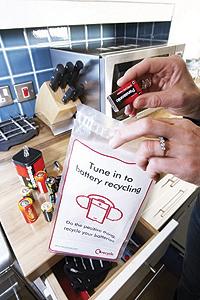
Mr Pedrotti compared the low levels of battery recycling in the UK to that in other European countries, where he said it was part of the “recycling culture”, and claimed that, for the UK, “it's getting that culture change that will be the biggest challenge”.
“It's stopping you and me chucking batteries in a black bag,” he explained, adding that “it will take a while”.
Under the UK Battery Regulations, battery compliance schemes will be expected to run publicity campaigns on behalf of their producer members, and Mr Pedrotti claimed that they would have a key role to play.
“The main thing is that these producer schemes will have the challenge to market themselves and get the message out to members and you to recycle them,” he said.
Stakeholder group
At the Associate Parliamentary Sustainable Resource Group event, Mr Pedrotti revealed plans for a portable batteries stakeholder group that would be established as part of a “feedback loop” that the government was aiming to put into place for the new regulations.
“We recognise the challenge, and we want the feedback to know what's happening that's good and bad,” he said.
He explained that the group would be similar to those in place for other producer responsibility systems in the UK; with the WEEE Advisory Board in place for WEEE and the Advisory Committee on Packaging for the UK packaging regulations.
Backhauling
With retailers putting more than 32 kilograms a year of batteries onto the market expected to offer in-store take-back of waste portable batteries, the event also heard concerns from Bob Gordon, head of environment at the British Retail Consortium, that current regulations would work against the process of backhauling – batteries being taken back in lorries from shops to distribution centres.
Citing the combined impact of hazardous waste regulations, dangerous goods regulations and waste carrier regulations, Mr Gordon said that, while they did not strictly prohibit backhauling, the system was “prohibitive in execution as currently it stands”.
And, he claimed that, while retailers had been open to the idea of using backhauling for batteries, once the batteries regulations had been published in April 2009, many had gone off the idea.
However, in response, Environment Agency official Bob Mead said “we're aware that these regulations make it look complicated”, and revealed that “Defra is working on pulling together some written advice that will simplify these requirements”.
Mr Mead explained that the department of transport and the Environment Agency were also involved in this process, with Defra official Sean Ryan adding that the department hoped to publish the advice note by the end of July, with the potential for advice from the Health and Safety Executive on storing batteries to also be included in the document.


Register for free to comment