


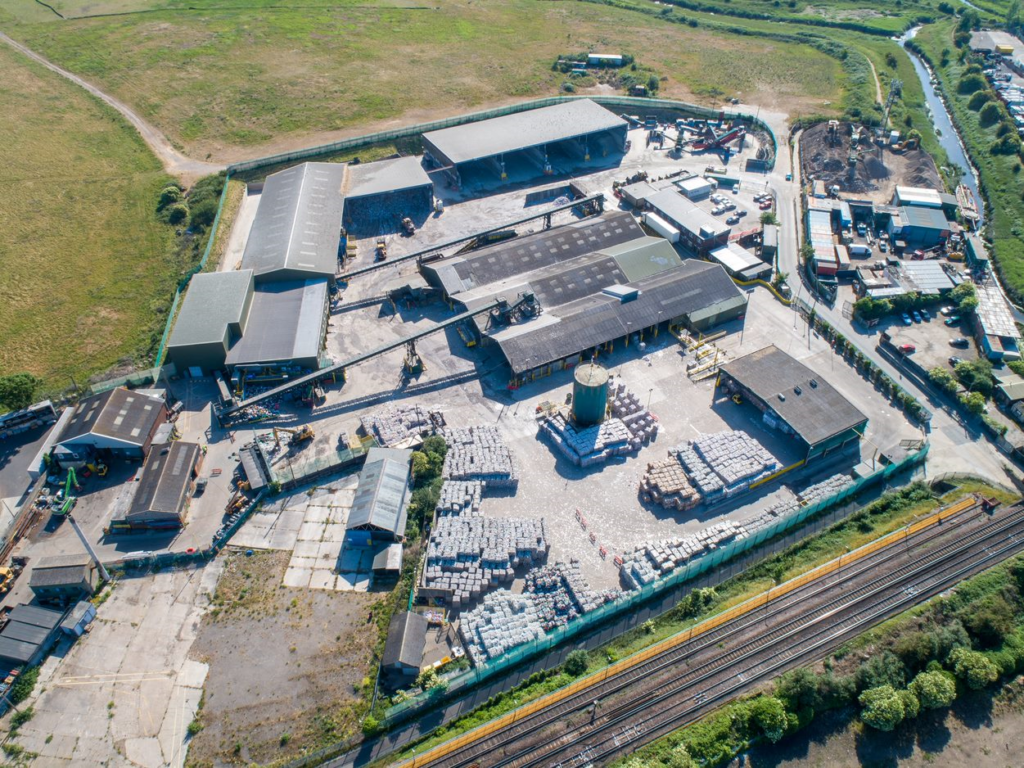
The transaction will support the refinancing of existing facilities and a new phase of development at the Crayford site, which was acquired by the company from Viridor at the end of 2021.
Structured as a five-year arrangement, the deal featured a performance-linked margin grid. Natwest will also provide operational support through clearing services and maintain headroom for future requirements, including foreign exchange (FX), interest rate management (IRM) and bonds.
Upgrades for Crayford MRF
N+P said the funding will facilitate an extensive capital expenditure programme at Crayford, comprising capacity expansion, infrastructure upgrades and the introduction of advanced AI-enabled and robotic sorting technologies.
The enhancements will be designed to improve operational efficiency, increase processing capacity and strengthen the facility’s role within the South East’s waste management infrastructure.
Peter Lam, Group Financial Director at N+P Group, commented: “NatWest’s support has been instrumental in helping us scale the Crayford site and invest in cutting-edge technologies.
“Their understanding of our sector and long-term vision made the process seamless and genuinely collaborative.”
Investments across Crayford and Teesside
In addition to the financing package, N+P confirmed three strategic investments across its Crayford and Teesside sites, aimed at improving operational resilience, safety and overall performance.
At Crayford, the Mini-MRF facility will undergo a transformation through the installation of state-of-the-art optical sorting technology.
The upgrade is expected to improve separation efficiency, reduce residual waste volumes and enhance recovery rates by enabling the capture of additional recyclable commodities.
Construction is set to begin this week, with operations anticipated to commence in early April 2026.
A separate project at the main Crayford MRF will see the automation of the mixed paper sorting line, with completion scheduled for September 2026.
At N+P’s Teesside plant, an optimisation project due for completion by September 2026 will introduce a dedicated processing line for the fines stream.
The investment will increase the recovery of ferrous and non-ferrous metals and raise throughput capacity from 33 to 38 tonnes per hour.

Subscribe for free