

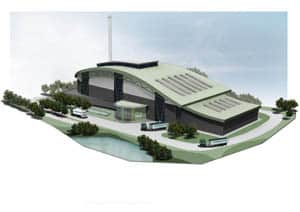
The company will begin a public consultation on February 2 for the proposals to build the Brig y Cwm plant, which would generate around 70MW of electricity, at a site near Merthyr Tydfil.
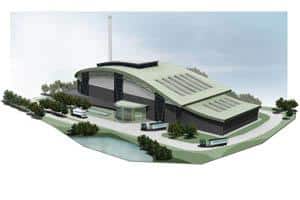
With the capacity to process both household and commercial residual waste, Covanta claimed that, with Welsh landfill sites set to close this year, the plant would reduce councils' and businesses' reliance on landfilling residual waste.
Malcolm Chilton, Covanta Energy's UK managing director, said: “The plant will greatly reduce the need for Welsh local authorities to send non-recyclable waste to landfill sites, some of which are due to close in the near future.”
He added: “We already supply millions of homes with clean energy from non-recyclable waste, and we are proposing a plant which will be sized to meet the needs of Wales.”
If built, the facility would be big enough to take a large proportion of Wales' household and commercial residual waste, with the country's municipal waste arisings that were not sent for recycling or composting in 2007/08 totalling 1.194 million tonnes.
Funds
The announcement of Covanta's proposals also comes just days after Welsh environment minister Jane Davidson announced the Welsh Assembly Government (WAG) would provide funds of up to 25% of the net costs councils faced for using new waste treatment facilities (see letsrecycle.com story).
The WAG's 'International Business Wales' group has been involved in discussions with Covanta about its plans and, the company's move to develop a facility in Wales was well-received by WAG deputy first minister, Ieuan Wyn Jones.
He said: “I welcome Covanta's interest in Wales. The company has a strong reputation for waste to energy activities in the United States in terms of municipal and commercial and industrial waste.
“Covanta is at the start of a journey which will involve it in applying for planning permission and in tendering for local authority projects alongside other interested parties,” he added.
However, the development of energy-from-waste (EfW) facilities in Wales is currently bound by the WAG cap of 30% on the amount of residual waste that can be sent to EfW plants by 2024/25.
And, the Assembly Government has also set a target of recycling and composting 40% of Wales' municipal waste by 2009/10 and 70% by 2024/25.
Metals
Covanta has stressed that the plant will only process waste that cannot be sent for reuse or recycling, and the facility will have equipment to extract all non-ferrous and ferrous metals from any waste that arrives there.
It also plans to use an existing railway line running to the site to link the facility to a number of rail-operated waste transfer stations to be created across Wales, with the aim of reducing the amount of waste that needs to be transported to the plant by road.


Register for free to comment