


Councils have welcomed the announcement of successful bidders under the governments 250 million weekly waste collection fund, revealed by the Department for Communities and Local Government this afternoon (November 22).
The recipient of the highest amount of funding is Birmingham city council. It will receive close to 30 million to implement a recycling reward scheme, to be rolled out over 440,000 households and to introduce weekly recycling collections to 100,000 households that currently have a fortnightly recycling service. And the authority will maintain a weekly residual waste service.
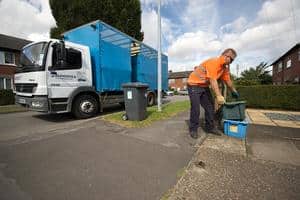
In total, DCLG says more than six million households across England will benefit from the scheme.
Councillor James McKay, Birminghams cabinet member for a green, safe and smart city, welcomed the news that the city had received funding, for what he described as an ambitious bid.
He said: I am thrilled that the Government has recognised the strength of our bid, and wants to work with us to bring transformational change to our waste collection services.
Birmingham put forward an ambitious set of proposals that will preserve weekly waste collections, make our streets cleaner and help increase recycling rates. Now the Government has rallied behind our plans.
We will shortly embark upon a period of public consultation over the details of the bid, to ensure we shape and introduce the best possible scheme for all citizens.
East Cambridgeshire
Meanwhile, East Cambridgeshire district council has been allocated over 4 million to expand the range of materials it accepts in dry recycling collections and to support weekly residual waste collections.
Councillor Richard Hobbs, chairman of East Cambridgeshires community and environment committee, said: Winning the funding to improve our recycling service is fantastic news. In a recent public consultation we had overwhelming support for our plans so it is great to know we can now deliver a recycling service which people want.
The task ahead of us now is to bring the service in as soon as we can. This will mean a lot of hard work from buying the vehicles and wheeled bins to deliver the service to identifying the homes which will not be suitable for the service.”

“I am pleased to see the focus on food waste collections and enhancing recycling.”
Joy Blizzard, chair, LARAC
Another of the big winners from todays announcement, Bournemouth council, will receive in excess of 21 million to enhance its existing fortnightly commingled recycling collections, introduce an incentivised weekly food waste collection scheme, and to construct a waste facility to process commingled recyclable material.
The councils portfolio holder for transport, cleansing & waste, councillor Michael Filer, said: This is tremendous news! I am delighted Bournemouth has been able to secure such a huge amount of money from DCLG to further enhance our recycling and waste schemes. We have an excellent and most envied track record when it comes to recycling and waste performance but we are keen to show we can do even better and this money will help us achieve our aims, especially with the help and support of our amazing residents.
LGA
According to the local authority representative body the Local Government Association (LGA), todays announcement will give councils the opportunity to improve recycling services and the organisation praised DCLGs inclusion of wider waste projects in the scheme.
Councillor Mike Jones, chairman of the LGAs environment board, said: Councils will be using this money to make an already efficient and well-run service even better for residents.
What matters most to people is that their waste is collected in a reliable, efficient way which allows them to recycle easily. This can be achieved in different ways, depending on local circumstances. For some homes, alternate weekly collections would not be suitable. But many who do have their non-recyclable waste collected fortnightly are happy with that arrangement.
There is no one size fits all solution something which DCLG has acknowledged through the sheer variety of council schemes it has awarded funding.
ESA
Waste management trade body the Environmental Services Association (ESA) also welcomed todays funding announcement, and praised the allocation of funds to projects involving food waste collection.
ESA director of policy, Matthew Farrow, said: The political debate over the rights and wrongs of weekly collections shouldnt obscure the fact that there look to be some useful developments among the wining bids. The new food waste collections can help turn more household waste into a resource through technologies like Anaerobic Digestion while those bids aiming to make recycling collections more comprehensive or easy to use can play a role in tackling what seems to be a recent slow down in the long term rise of Englands recycling rates.
A number of bids seem to be giving councils extra money to continue with the weekly collections that they already provide its somewhat surprising that the government believes this is value for money at a time when public spending is being cut.
Earlier this week, the ESA alongside the Anaerobic Digestion and Biogas Association (ADBA), the Chartered Institution of Wastes Management (CIWM) and the Resource Association sent a joint letter to Communities Secretary Eric Pickles, raising concern over the delay in the announcement of the scheme.
Funding
And, in a joint statement released today, ADBA, CIWM and the Resource Association criticised comments made by Communities Secretary Eric Pickles suggesting that local authorities who dont provide weekly collections face the threat of losing government funding support.
The groups said: Its deeply disappointing to see Mr Pickles threatening councils with a centralised system and dictating how they should be collecting waste and resources. This approach doesnt fit at all with the principle of localism for waste services.
Councils remain able to deliver collection services in line with local requirements. This could include the collection of residual waste one week and recycling the next, or weekly food waste collections alongside fortnightly dry recyclable collections and the evidence that this increases recycling and reduces operational costs is well established.
“Furthermore, public satisfaction with these services is as high if not higher in most cases as it was under weekly waste collection. As food waste collections are also increasingly introduced, the benefits in terms of waste reduction and energy generation through AD are becoming apparent to local residents.
LARAC
Joy Blizzard, chair of the Local Authority Recycling Advisory Committee (LARAC) said that the organisation was pleased that the fund had been announced after a delay of several weeks, but also criticised Mr Pickles suggestion that councils would be forced into a weekly collection system.
Ms Blizzard said: “Councils were concerned about the delay. The timescale is tight for the procurement procedures that now need to take place. I am pleased to see the focus on food waste collections and enhancing recycling.
“The way in which waste is collected is surely one of the most obvious services where localism (one of Mr Pickles key policies) should, and in most cases does take priority. LARAC’s view has always been that local councils are best placed to decide how services are run in their own areas.”


Register for free to comment