


Speaking at a FoE event held in London on Monday (April 27), the group's senior resource use campaigner, Michael Warhurst, called on councils to consider the impact that signing a 20 to 30 year-long deal could have, and how it might be affected by future developments, such as government policy and declining volumes of waste.
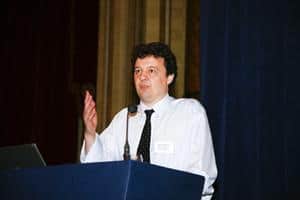
“This is easier to achieve with more flexible facilities, and shorter contracts,” he added.
Explaining how long-term contracts could impact on recycling, Mr Warhurst claimed: “Long contracts and inflexible residual waste treatments are a serious threat to maximising prevention, reuse and recycling.”
He cited the experience of Denmark, which has high levels of incineration and relatively low levels of recycling, as proof that energy-from-waste “held back” recycling.
Mr Warhurst called on councils to consider 10 key questions when they were deciding how to deal with residual waste treatment:
-
Has the council considered building smaller, cheaper facilities on short-term (five to 10 year) contracts?
-
Has the council modelled a reduction in municipal waste in its plans?
-
Has the council modelled the impact that recycling and composting rates above 70% could have?
-
Does the council have “real figures” for how much commercial and industrial waste there is in its area? And, how much of that can be recycled?
-
Is the council considering the separate collection of food waste, and the expansion of anaerobic digestion?
-
Will the council or contractor pay in the event of either planning delays, legal challenges, there not being enough waste for a facility or changes to taxes such as Landfill Tax or an incineration tax?
-
What procedures does the council have in place to prevent later “forced re-negotiation” of the contract, for example, if the company set up to deliver the infrastructure goes bankrupt?
-
Are councillors and the public able to access enough information to allow them to make informed judgements on the plans?
-
With the policy emphasis on reducing climate change, has the council got the evidence to show that it has adopted the best environmental option?
-
Is the council confident that future council tax payers will look back on this contract as a good use of taxpayers' money?
Commenting on future uncertainty over waste creation, Mr Warhurst said “recessions generally reduce waste, so it's going to go down”, adding that, as a result, “councils are going to have problems”, if they hadn't modelled a waste reduction into their plans.
“Predicting the residual's particularly challenging,” he said, adding that “the issue of how much we are going to recycle is clearly a real uncertainty.”
In terms of alternative treatment options, Mr Warhurst cited the current government support to develop AD facilities, but expressed concerns over whether sufficient waste would be available to put into the plants.
“It's really good way to get the food waste out but will the waste be available? How can we expand AD around the country if we're going to build incinerators at the same time?” he asked.
And, commenting on policy moves to reduce carbon emissions, he claimed: “I think we can assume incinerators will become less incentivised in forthcoming years and AD will become more incentivised.”

Register for free to comment