


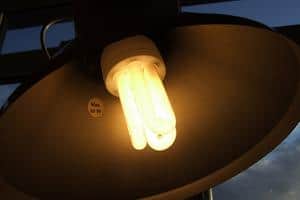
HPA guidance was published last month stating that, while the very small amount of mercury contained in a low-energy lightbulb was “unlikely to cause any harm”, both broken and intact bulbs “should be treated as hazardous waste” as, as such, the public should contact their councils for advice on how to dispose of them.
The HPA stressed that local authorities have to make arrangements for dealing with household hazardous wastes, and also directed the public to information about their disposal on the National Household Hazardous Waste Forum (NHHWF).
In general, the bulbs are collected via local authority household waste recycling centres and civic amenity sites.
But, speaking to letsrecycle.com about the issue, the chair of the National Association of Waste Disposal Officers, Steve Burdis, acknowledged that “this is not uniform across the board, though, as with most areas, our members are constantly looking at ways of improving services and environmental performance and I know some are exploring these avenues”.
And, he added that: “Although we do offer these type of collections and I would encourage all members of the public to use them, I suspect some will simply end up in the general waste and then landfill, EfW or other treatment. I stand to be corrected but I do not believe this to be illegal at present.”
His assertion was supported by Roy Watkinson, chair of the NHHWF, who noted the relatively low mercury content of the bulbs and claimed that: “At the end of the day, if someone says they're going to throw it away, there's not much you can do.”
Awareness
Despite this, Mr Watkinson noted that, with the recent publicity on the phasing out of old-style bulbs, “maybe it's a good time to raise awareness about possible routes available”.
Explaining that “I'm not convinced you need to do a specific campaign for mercury”, he instead said he'd be “very happy to see a greater emphasis in general from local authorities looking to reduce the hazardousness of waste in dustbins”.
Mr Burdis noted that councils should be prepared to deal with any increase in queries from the public in relation to disposing of low-energy bulbs, explaining that “that is what local authorities are there to do, guide and advise members of the public”.
He added that he did not see the issue as an “extra burden”, stressing that “as councils we also make every effort to keep our websites and advice up to date which is an ever lasting job, and as new guidance and initiatives come out I'm sure most, if not all, will try to reflect them as part of this ongoing approach.”
Hertfordshire
In the wake of the HPA's advice, Hertfordshire county council issued a release advising residents of how they could dispose of the bulbs safely, and, the council's senior waste manager, Matthew King, explained that they also advertised disposal routes on their WasteAware website, as well as providing a leaflet on the bulbs that was on offer at the council's 19 HWRCs.
With all 19 HWRCs registered as designated collection facilities (DCFs) under the WEEE regulations, the council receives funding for containers and is eligible for the collection of their material.
Bulbs collected at the sites are dealt with by the ERP WEEE producer compliance scheme, who contract Harlow-based Electrical Waste Recycling Group (Lampcare) to collect and dispose of the bulbs.
Mr King said this meant “residents in Hertfordshire can dispose of their energy saving bulbs at any HWRC in the county with the knowledge that it will be securely transported and safely disposed/recycled”.
Environment Agency
Outlining the Environment Agency's position on the issue, policy advisor, Adrian Harding, said: “Low-energy light bulbs save money and reduce the amount of carbon dioxide produced from lighting our homes. We encourage people to recycle these bulbs when they eventually stop working.
“They are classified as Waste Electrical and Electronic Equipment and householders should now find it easier to recycle these bulbs and other old electrical equipment. Check with your local authority whether low energy bulbs can be recycled at your civic amenity site; some retailers will also take-back an old bulb when you buy a new one,” he added.

Register for free to comment