
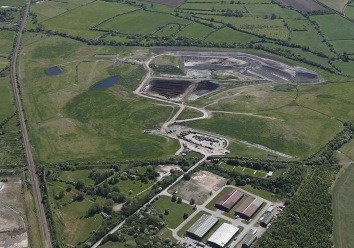
Plans for an anaerobic digestion plant in Gloucestershire capable of processing 30,000 tonnes of food waste each year have been submitted to the county council by waste management company Cory Environmental.
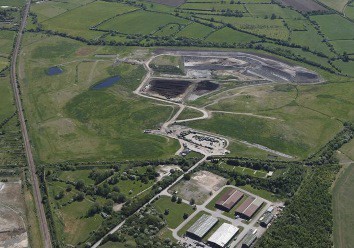
The proposals would see the AD plant as well as a pre-treatment, recycling and bulking facility constructed within the Wingmoor Farm West landfill site operated by the firm on Stoke Road, Bishops Cleeve.
According to the planning documents, the proposals will be temporary in nature as the life of the proposed development is proposed to be linked to the existing consented waste management activities and uses on the landfill site.
Under a contract with the Gloucestershire county council, Cory currently disposes of the countys residual municipal solid waste via landfill at the site.
However, planning documents state that the proposed pre-treatment and recycling facility would help divert more waste from landfill by processing up to 70,000 tonnes of waste per year into a Refuse Derived Fuel (RDF).
Cory also manages the countys household food waste as part of the Gloucestershire contract, which is currently managed off-site before being bulked up and sent to Rose Hill Farms in-vessel composting facility near Dymock.
But, the new proposals would see this food waste processed at a 1MW AD plant capable of providing energy for more than 1,000 homes. It will also produce a digestate fertiliser for local farmland as part of the process.
Construction on the site is expected to start in Spring/Summer 2014, with the entire build programme taking in the region of nine months before the facilities become fully operational in 2015.
Strategy
‘The proposed development offers a wide range of environmental and economic benefits’
Cory Environmental’s planning statement for the development
The Gloucestershire Waste Core Strategy adopted in November 2012 allocated the northern part of the Wingmoor Farm West site as a strategic waste site. The current environmental permit allows up to 500,000 tonnes per year of waste to be accepted at the farm.
Corys environmental statement submitted to the county council as part of the application states: The proposed development offers a wide range of environmental and economic benefits. These include provision of sustainable waste management infrastructure to meet an identified need, the movement of waste up the waste hierarchy, the co-location of facilities with existing waste uses and infrastructure, the generation of renewable and low carbon energy, reductions in carbon emissions as well as direct and indirect economic benefits to the local economy.
In November 2013, Cory Environmental opened its first AD plant in Somerset, built as part of a seven-year waste treatment contract with North Somerset council (see letsreycle.com story).
Biogen Bryn Pica AD
Elsewhere, construction has now started on Biogens 22,500 tonnes-per-year capacity AD plant adjacent to the existing Bryn Pica landfill site near Aberdare, South Wales.
The plant is expected to be fully operational and generating electricity enough to power more than 2,000 homes by late 2014, while also producing a biofertiliser for local farmland.
Food waste feedstock for the plant will be collected from homes within the Rhondda Cynon Taf, Merthyr Tydfil and Newport City areas under a 15-year contract agreed with Tomorrows Valley Hub a partnership of the three councils (see letsrecycle.com story).
It will be Biogens third AD facility in Wales, with work having already started on the companys 22,000 tonne per year capacity plant in Denbighshire, while the 11,000 tonnes per year capacity 5 million Gwynedd AD facility opened in November 2013 (see letsrecycle.com story).


Register for free to comment