
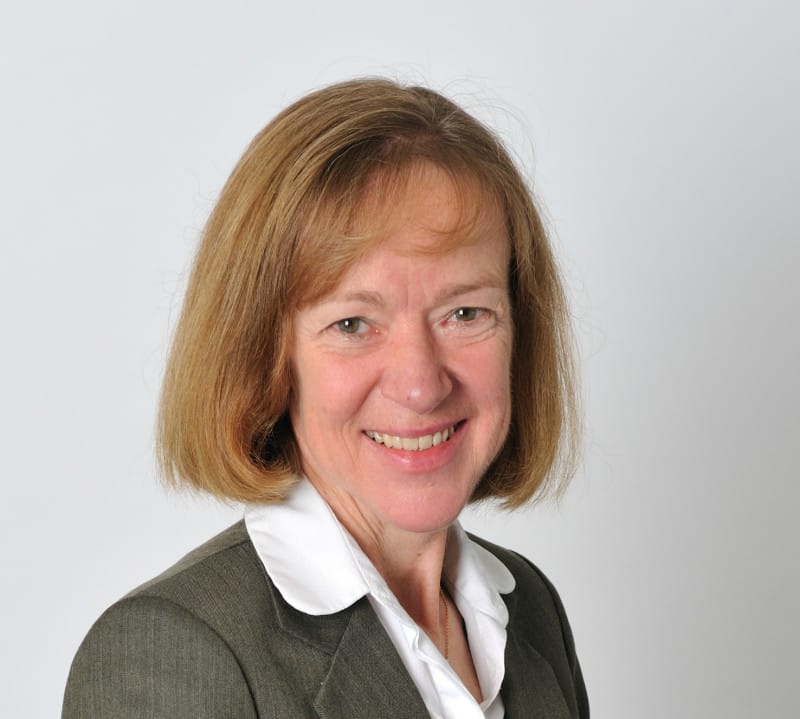
The WRAP charity’s five-year plan launched this morning called for a “resource revolution” to “accelerate” the move to a circular economy away from a traditional linear economy (make, use and dispose).

The report redefined the three R’s for the future as guidelines that require taking a whole lifetime approach. These included: re-inventing how we design, produce and sell products; Re-thinking how we use and consumer products; and redefining what is possible through re-use and recycling.
Over the next five years, WRAP plans to “drive change in areas where [it] can make the biggest difference”. It has identified food and drink, clothing and textiles, and electricals and electronics as the key areas of focus as together they account for 25% of carbon footprint, 80% of water footprint, and 40% of household waste in the UK.
Food waste
Not surprisingly, Dr Goodwin highlighted – this afternoon – food waste as a priority area for the EU circular economy package to focus on. Food and drink consumption the UK alone accounts for 70% of total water footprint, 20% of territorial greenhouse gas emissions, and £19 billion worth of waste every year.
She added: “WRAP’s work in the area of food waste has helped lead to a reduction of over 20% in the UK. We all have much to be proud of.
“But globally we still waste a third of all food. It’s enough to feed those who are starving, not once, but four times over. It’s simply unacceptable. And we know it’s only going to get worse, due to rising populations and an increased appetite for Western consumption habits.
“Food waste is a global problem, and needs a collective solution to reduce and prevent it. I believe EU member states are well placed to take a leading role to meet this aim. And so I would expect an ambitious circular economy package to include a Europe wide commitment to achieve this.”
The Commission is consulting on its idea for the revised Circular Economy Package, which WRAP will feed into. The WRAP chief lent support to the use of voluntary agreements, where appropriate, as these could be readily tailored to specific industries, encourage collaboration, and be put in place more quickly and cost effectively.
However, she added: “But overall, what the Circular Economy Package needs to do is reinvent what’s possible. The circular economy allows us to not just remove the barriers, but to completely change the shape of the future.”
Savings
Dr Goodwin said that over the past five years WRAP has helped achieved a £1bn worth of cost savings to business, consumers and local authorities.
“By encouraging others to act, we delivered a 17-fold return on funding in England, and a 20-fold return on funding for our priority areas.
“We have reduced greenhouse gas emissions by nearly 50 million tonnes, the equivalent to the annual carbon emissions of Portugal. We reduced waste by 4 million tonnes. That would fill 430,000 rubbish trucks, which, if parked bumper to bumper, would stretch from Glasgow to Istanbul. We diverted 29 million tonnes of waste from landfill, and reduced water consumption by 856 million cubic litres.”
UK consumption of clothing and textiles every year accounts for 38 million tonnes of global carbon equivalent emissions, 200,000 litres of water consumption per household, and 1.8 million tonnes of waste production.
Across electrical, WRAP research shows that UK householders have around £1bn worth of electrical and electronic equipment in their homes that they no longer use. Less than 10% of these items are re-used and almost 40% go to landfill.
The WRAP report also cites research that shows that a shift to a circular economy in the UK could create up to 500,000 jobs by 2030.

Register for free to comment