

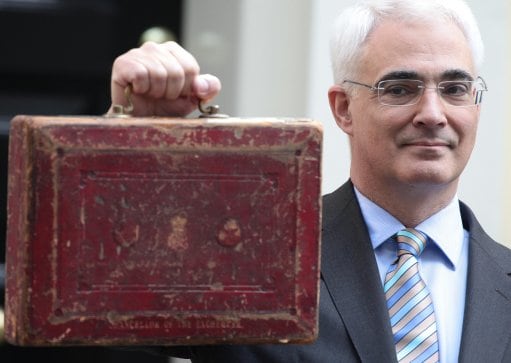
The pledge came as Chancellor Alistair Darling released this year's Pre-Budget Report yesterday, along with the 2007 Comprehensive Spending Review, which sets out the government's public-sector funding plans for the three financial years 2008/09 to 2010/11.

We have provided sufficient resources to ensure local authorities can keep overall council tax rises substantially below 5%.
Alistair Darling
Mr Darling's first major announcement on public spending as Chancellor included the decision that more and more local authorities will see their waste management plans supported through the PFI system.
PFI funding available to support long-term local authority waste contracts will rise from the current £280 million a year (2006/07) to £700 million a year by 2010/11.
A total of £2 billion will be available over the three financial years up to 2010/11, according to the Treasury.
The importance of the PFI funding looks set to rise as local authorities face tighter budgets after the Comprehensive Spending Review. Although the Chancellor said that grants to local authorities for local services in England will increase to £26 billion by 2010, councils are already saying they could have to cut services like care for the elderly to meet other targets including those on waste.
As council officers, executives and elected members pour over the Treasury's documentation this morning, the local government sector is already labeling the Comprehensive Spending Review as the “worst settlement for local government in a decade”.
Despite this, speaking in the Commons yesterday afternoon Mr Darling insisted that: “We have provided sufficient resources to ensure local authorities can keep overall council tax rises substantially below 5%.”
Defra – the Department for Environment, Food and Rural Affairs – has had its budget increased by 1.4% “in real terms”, and said this would allow a “step-change in investment for sustainable waste management options through the rise in PFI funding.
Commenting on Mr Darling's spending plans, Hilary Benn said of his Department's intention to increase PFI funding: “We need to reduce waste significantly in the coming years.”
Elsewhere in the Chancellor's announcements, the issue of climate change was of major concern, with implications for renewable energy and “carbon pricing” discussed, including the need for more Combined Heat and Power.
Landfill Tax
Within the Pre-Budget Report, the Chancellor also confirmed yesterday the announcement in this year's Budget that the Landfill Tax will rise by £8 per tonne each year from the current £24 per tonne rate from April 2008 “until at least 2010/11”.
He said the lower rate of Landfill Tax that applies to inert material will also rise from £2 per tonne to £2.50 per tonne.
The Treasury also announced some forthcoming changes concerning how waste arisings from contaminated land and from dredging will be dealt with under the Landfill Tax.
Concerning dredging waste, it pointed out that Europe's Landfill Directive requires waste from the dredging of waterways to be treated so that it doesn't contain any free-draining liquids. Recognising that dredging can help to prevent flooding, the Treasury said from October 30, 2007, there will be an exemption from the Landfill Tax for treated dredging waste.
Concerning the contaminated land, the Treasury revealed that an announcement on the Landfill Tax exemption will be made at the next Budget in 2008.
As the Landfill Tax rise next year was confirmed, the Treasury noted that the total quantity of waste send for disposal in landfills fell by 26% since Labour came to power in 1997. The amount of active waste going to landfill dropped by 19% from 1997/98 to 2006/07.
The Pre-Budget Report highlighted the “good progress” being made on household waste recycling in England, with rates up from 7.5% in 1996/97 to 26.7% in 2005/06.
The government also confirmed Budget announcements including the rise in Climate Change Levy in line with inflation from April 2008.

Register for free to comment