
A charge for the collection of green waste was implemented by the council in March 2014 – having been approved by councillors in September 2013.
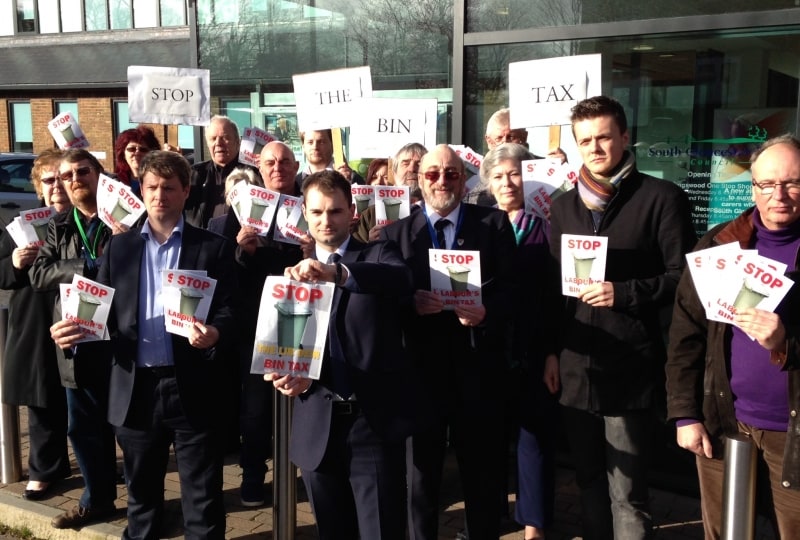
The measure saw the council come in for criticism from the then Communities and Local Government minister Brandon Lewis, who singled the authority out for criticism after it was claimed that just 36,000 out of its 106,000 households had opted to pay for the service.
Mr Lewis accused the council of treating residents as ‘cash cows’ by implementing the scheme (see letsrecycle.com story).
Upon introducing the charge, the council had claimed that the new scheme would create savings of around £1.2 million per year. The material is collected on a fortnightly basis and is composted at Crapper & Sons’ green waste treatment site at Royal Wootton Bassett, Wiltshire.
Campaign
Conservative council candidates campaigned on an anti-green waste charging platform, despite having been the largest single-party on the council when the measure was introduced. The motion was passed with the backing of the council’s Lib Dem and Labour councillors.

Having now gained majority control of the council, the Conservatives have indicated that they will be making plans to repeal the green waste charge, by reducing the yearly charge year-on-year.
And, according to the local party, the charge for green waste has been blamed for a surge in fly tipping across the district.
Ahead of voting last week, district councillor and council leader Matthew Riddle, said: “There is huge concern locally about this sudden increase in fly tipping and the associated costs of clearing it away and tracking down the perpetrators. It cannot be a coincidence that this has happened so soon after the bin tax was brought in.”
Charges for green waste collection have largely been seen by local authorities as a way of keeping a discretionary service running without having to incur significant costs from other areas of the waste collection budget. Increasingly over the course of the last five years councils up and down the country have introduced charges – although this can often come at the cost of reduced participation rates from residents, many of whom may be unwilling to pay for a service that was previously provided at no cost.

Register for free to comment