


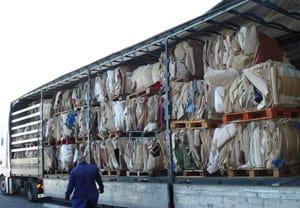
The voluntary 25% target, which is still subject to stakeholder discussions, would indicate a considerable leap in recycling performance for the sector, which currently recycles around 2% of the 350,000 tonnes of broadloom carpet waste produced annually.
Kate Chappell, chief executive of Carpet Recycling UK, a trade association set up to increase carpet recycling, told letsrecycle.com: “The percentage we have been discussing is 25% by 2013, at the moment there is still more to be done on that to see if that is the right level and the right year and so we will certainly be looking at that.”
Carpet Recycling UK – which represents carpet producers, retailers and recyclers – made the proposal during the development of its National Action Plan, which is expected to be published next month (see letsrecycle.com story).
Action Plan
The Action Plan is intended to offer a strategic steer for the carpet recycling sector and also to enable it to present a more focussed basis from which to lobby for government funding.
It represents an offshoot of the National Resource Efficiency Plan for the Flooring Industry being developed by Kent-based consultancy Peter Thomas Environmental on behalf of the Contract Flooring Association – a trade association for the flooring sector.
The flooring industry plan, which has WRAP funding, looks to help boost flooring recovery rates in the wake of policy and legislative demands placed on producers by the sector-wide Strategy for Sustainable Construction launched by the Department for Business, Innovation and Skills in June 2008.
Mr Thomas told letsrecycle.com that, under the umbrella of the flooring industry plan, five National Action Plans were being developed. These include: broadloom carpets; carpet tiles; resilient flooring cover; hard flooring; and, resin flooring.
“Ultimately, they will come out as sections of the National [Resource Efficiency] Plan, and with each separate product there will be a National Action Plan,” he said.
Issues
Also suggested as “key issues” for the carpet recycling sector would be increasing its work with the Waste & Resources Action Programme (WRAP) and Ms Chappell explained that the association had been lobbying to have carpets included as an area of focus under WRAP's 2010/11 budget.
In its outline for the Action Plan, Carpet Recycling UK states: “Carpet recycling has previously been ‘out of scope' for WRAP but extension of WRAP's remit to include carpet recycling is being discussed, meaning that a degree of public funding would be available to support end market development for carpet recycling.”
In addition, Carpet Recycling also suggested the introduction of a system known as ‘backmarking', to make it easier to understand the materials in the carpet and, therefore, increasing its recyclability.
FRNs
Following calls from other sections of the flooring industry, Carpet Recycling UK is also interested in the possibility of introducing flooring recovery notes (FRNs) for the sector, which would work in the same manner as Packaging Waste Recovery Notes (PRNs) for packaging producers.
Under the PRN system, producers obligated under the Producer Responsibility (Packaging Waste) Regulations pay money towards the cost of collecting and recycling packaging through the purchase of PRNs or their export equivalent, PERNs.
However, Carpet Recycling UK downplayed its support for the proposal and stressed that plans for FRNs were “very much at the discussion stage” and that its feasibility would need to be taken into account first as it could potentially require legislative changes.
“We want to make sure that anything proposed is going to be workable and usable by the industry,” Ms Chappell said. “We don't even have the position that we would want to see it introduced, it is just something we would want to discuss.”
Roadmap
Ms Chappell acknowledged that there was support for developing a product road map for carpets, as it would allow the sector to improve resource efficiency throughout the entire production chain by looking at aspects such as the blends of carpets and the use of plastics.
The idea had previously been mentioned at the October 13 2009 meeting of stakeholders involved in the National Action Plan – which includes Defra representation, along with carpet recyclers, distributors and manufacturers.
At the meeting, Sean Smith, representing Defra, highlighted that road maps had been carried out for materials such as milk and plasterboard, however, “gaps needed to be investigated” before a complete road map could be completed for carpet.
However, Ms Chappell stressed that Carpet Recycling UK was currently focussed on the development of the Action Plan, which will look at improving end markets for waste carpet.

Register for free to comment