

The group has launched the Campaign for Real Recycling and has membership among the community sector and many reprocessors.
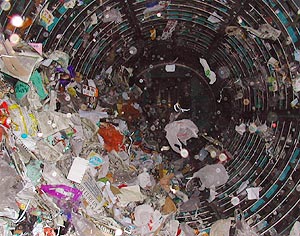
 The campaigners believe using machines within MRFs, like this trommel, to separate mixed recyclable materials is the wrong approach |
Besides calling for kerbside sorting, it also criticised local authorities for being less than transparent in their decisions to move towards commingled collections and use of MRFs.
The campaign has been launched by reprocessors including the three UK newsprint mills – Abitibi-Consolidated, Aylesford and UPM Shotton – and has the backing of aluminium recycler Novelis as well as some parts of the glass industry. Friends of the Earth is also supporting the campaign, as is container manufacturer Straight plc.
A statement from the group said: “UK reprocessors need quality materials to make their products to the specification they have agreed with their customers. The recyclate feedstock they are currently receiving is now reaching the point where it is not good enough. All the evidence suggests that this is due to recyclables being collected via the commingled method, where they contaminate each other, especially if they are compacted.
“For reasons best known to themselves, an increasing number of local authorities are opting for this method,” the Campaign for Real Recycling added.
Priorities
The campaign has identified three priorities. It wants:
- Defra to support separation of materials at the kerbside;
- carbon footprinting for recycling and waste diversion
- Councils to examine and debate the financial and environmental sense of their recycling collection methods.
Chris White, recycling director at Aylesford Newsprint, speaking for PaperChain which is supporting the campaign, told letsrecycle.com: “The problem is that more and more is being collected through the commingled route. We get all sorts of things in paper which the public have put in it. If you have separation at the kerbside you will be helping to stop the market committing suicide.”
As to whether reprocessors want to push the costs of any extra sorting back down the chain towards councils, Mr White said: “I want to buy newspapers and magazines so if they put tin cans in I have to pay for sorting that. MRFs are not giving a clean environmentally friendly product. We believe the only way that will eventually happen is when we have materials segregated at the kerbside.”
Mr White added that one of the problems with collecting material in a commingled approach was the use of refuse collection vehicles (RCVs) which meant that material was compacted, so increasing contamination, and that operators often failed to clean their vehicles properly.
Community
The community sector has traditionally sorted materials at the kerbside, and is strongly supporting the campaign.
Mal Williams of Cylch – Community Recycling Network Wales – said: “Collecting recyclates in single bag or wheelie bin systems is financially, socially and environmentally inefficient.
| Related links: |
“Prudent local authorities should be trying to maximise revenue from the materials they are gathering. Instead many are mixing and compacting and producing materials of low economic and environmental value. This makes recycling look expensive when in fact it is the low cost option,” Mr Williams insisted.
The campaign also commented on commingled material and the issue of material exports to the Far East. A statement argued that: “Kerbside sorting gives better public relations for local authorities. People have greater confidence that source separated waste will be recycled efficiently and not shipped to the Far East for disposal.”

Register for free to comment