

At a meeting of the council’s General Purposes committee on Tuesday (20 September), councillors resolved to approve a business case which would identify savings that could be made by renegotiating its waste disposal arrangement.

While the council is unlikely to withdraw from the contract completely – although this has been put forward as an option – it fears that by doing nothing the ‘continual increase of landfill tax as well as population growth’ will mean an escalation in service costs.
Among proposals included in a preliminary report to the committee from the council’s executive for economy, transport and environment, Graham Hughes, is an option to ‘reduce the operating cost or removal of the Waterbeach MBT and refinancing’.
The scenario would bring about ‘fundamental change’ to the contract and is likely to deliver the ‘greatest savings’ of any of the options considered.
PFI
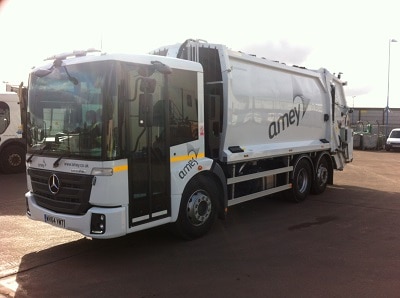
The council’s £730 million PFI contract for waste disposal was originally signed with Donarbon in 2008, a Cambridgeshire-based waste firm which was subsequently sold to Spanish-owned waste company AmeyCespa two years later for £48.6 million (see letsrecycle.com story).
Amey, which inherited the contract from Donarbon, processes over 300,000 tonnes of residual waste from Cambridgeshire households each year at its 400-acre Waterbeach MBT site. It also includes a 60,000 tonnes-per-year capacity materials recycling facility, built in 2013 to sort South Cambridgeshire district council’s dry recyclables.
In September 2012, a mechanical failure within the compost-turning equipment at the MBT plant put the facility out of action for more than a year. The site returned to full operations in September 2013, but the shutdown meant the county council was forced to divert around 2,200 tonnes of refuse to landfill each week (see letsrecycle.com story).
‘Committed’
In his report, Mr Hughes notes that both the chief executives of Amey and Cambridgeshire county council are ‘committed’ to making savings from the contract – with a negotiating group set up to discuss how these can be met.
At the same time, technical trials are already underway to identify the level of savings achievable in one year through reducing the cost of dealing with MBT products – as well as technical work to ‘improve the performance’ of the in-vessel composting (IVC) operation.
By the end of 2016/17, the council aims to have concluded negotiations on the sale of refuse-derived fuel (RDF) produced at the plant – and by 2018/19 changes to the operation of the Waterbeach processing plant ‘as necessary’.
The General Purposes committee will reconvene once a ‘full business case’ for altering the contract has been published.


How come that the proposed waste agreement assumes there is a need for a gate fee for treatment when all across the EU Gate Fees are disappearing and are already reaching €Zero? Does it seem obvious that the UK Waste Industry is in a total muddle here by forcing the Public and Tax Payers to pay for something which is no longer a need?