

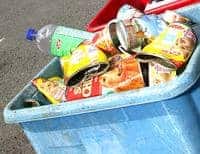
He said one of the advantages of mixed collections is that they can all be collected in the same truck, reducing vehicle movements and carbon emissions.
However, if the recyclables then have to be sorted in a materials recycling facility, this could have a negative effect on these carbon savings.
Cllr Haley explained that in Haringey, commingled collections were picked up from householders and separated at kerbside into compartments in a split vehicle. Cardboard and plastics are placed in one compartment, for example.
He said the commingled versus source separated collection debate “needed a proper life cycle analysis” to determine which produced the least carbon.
Energy-from-waste
The Haringey councillor also put forward the suggestion that more carbon could be saved by sending material to an energy-from-waste (EfW) plant, rather than exporting it and asked: “Should we send paper to an EfW plant or ship it to China? We need to take on board the CO2.”
This issue was taken up by David Rumble of waste firm Bywaters, who said: “At the moment, sending to China is better than sending to incineration when it comes to carbon, as the ships would be going back empty.”
Cllr Haley replied: “It's cheaper to send it abroad at the moment but that's all going to change as we develop infrastructure in our own country.”
Some delegates to the event raised concerns that the need to supply emerging energy-from-waste plants in the UK with feedstock could see some recyclable material incinerated to keep up with demand. It was feared this could “choke off” recycling.
Cllr Daniel Moylan, chairman of the London Councils' organisation's transport and environment committee and deputy leader of the Royal Borough of Kensington and Chelsea, said: “There is no evidence to suggest this – it's an assertion rather than evidence. There has to be some form of residual waste treatment as methods in the waste hierarchy are not adequate.”

Register for free to comment