



Guidance is needed at the first opportunity to explain the full implications of proposed amendments to the law governing separate recycling collections.
That is the message from local authorities in North London, Merseyside and Wales which responded to a consultation on amending the Waste (England and Wales) Regulations, which closed on April 12 (see letsrecycle.com story).
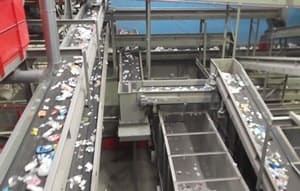
In the consultation, the government is proposing to make it a requirement for councils to introduce separate collection of paper, plastic, metals and glass by 2015 when technically, environmentally and economically practicable (TEEP) and necessary to meet the appropriate quality standards for the relevant recycling sectors. Where not necessary or practicable, commingled collections will be allowed.
Further detail on what will qualify as TEEP is due to be consulted on after guidance is published by the European Commission and a Judicial Review concerning the regulations is resolved.
But, responding to the consultation, the North London Waste Authority (NLWA) said that it was impossible to understand the full impact of the change without the TEEP guidance in place. The NLWA said this would be crucial in determining whether councils which chose to collect recycling commingled would be open to legal challenge.
The NLWA added: In the face of a challenge it is essential that supporting guidance is provided regarding TEEP and without sight of this it is difficult to provide a meaningful response regarding the interpretation of how different collection approaches, and in particular commingled collection, would be assessed to decided if it was TEEP in a particular area.
Whilst the Authority understands the reasons for consulting on the proposed amendments to the regulations now in the absence of accompanying guidance we urge the production of the draft guidance for consultation at the earliest opportunity.
The NLWA is responsible for managing the waste from the seven north London boroughs of Barnet, Camden, Enfield, Hackney, Haringey, Islington and Waltham Forest. All but one of these constituent boroughs collects recyclable material commingled.
As a result, the NLWA said it was essential that the ability to collect material was not restricted, especially in an inner-city environment where kerbside sort could cause congestion and was harder for people living in flats who have less space for bins.
Merseyside
The NLWAs view was echoed by the Merseyside and Halton Waste Partnership, which said that the success of the amended regulations in protecting local decision making would be heavily dependent on the accompanying guidance. And, it stressed the need for the guidance to support local authorities in choosing the best value collection systems.
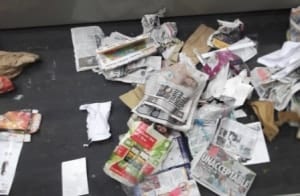
The Merseyside and Halton Waste Partnership represents the local authorities of Halton, Knowsley, Liverpool, Merseyside Recycling and Waste Authority, Sefton, St Helens and Wirral. There are currently a variety of collection systems in operation across the region and the provision of a materials recycling facility.
In its response to the consultation, the partnerships waste strategy policy officer, Glynn Stevenson, said: We ask that the guidance accompanying the amended regulations confirms the acceptability of commingling as a collection system and recognises the potential benefits it can deliver.
The guidance should allow local authorities to be confident that their collection decisions are unlikely to be challenged, assuming that recycling quality standards are met.
The Partnership added that it was concerned that the ongoing debate about collection methodology implies there is something wrong with commingling as a collection system and overlooks the overall objective of the revised European Waste Framework Directive to increase both the quality and quantity of recycling.
Wales
The Welsh Local Government Association, which represents the 22 local authorities in Wales, added that, while it supported the amended regulations, there was room for disagreement until guidance was produced.
Related Links
It said: Room for disagreement clearly remains in relation to what is considered practicable. It is noted that guidance is to be produced (para 5.13) and local government will need to be fully involved in its preparation. The same applies in relation to what are considered appropriate quality standards. For example, should the quality bar be set at a level reflecting the type of material recycling companies would ideally like to receive or at a level where reprocessors are willing to pay for material?
Meanwhile, reprocessors and environmental campaigners have hit out at proposed revisions to rules covering recycling collections, labelling them not adequate (see letsrecycle.com story).


Register for free to comment