


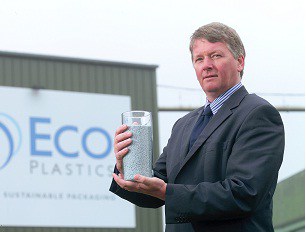
The managing director of the UKs largest plastic bottle recycling facility has warned that the UK should focus on capturing greater numbers of plastic bottles instead of turning its attention to mixed plastics recycling.
Speaking at the Resource Recovery Forums summer conference titled Mixed Plastics Whats left to sort? in London yesterday (July 3), Jonathan Short, managing director of Lincolnshire-based plastics recycler ECO Plastics told delegates that significant capital expenditure would be required before tonnages of mixed plastics could be recycled in the UK.

The event also heard from the group head of packaging for Nestl who revealed that manufacturers are confused over plastics recycling, and from the Waste & Resources Action Programme (WRAP) which defended mixed plastics recycling.
ECO Plastics, runs a 150,000 tonne capacity plastics recycling facility in Hemswell and has a partnership with Coca Cola Enterprises which has invested to boost bottle recycling capacity on site.
Quality
Mr Short said that his company has seen a significant rise in the amount of mixed plastics such as pots, tubs and trays being collected over the last three years, which he said was having a negative impact on the quality of plastic bottles being received at the plant.
And he argued that without further investment in infrastructure and long term commitments from producers to use recycled materials, the mixed plastics market in the UK may not be sustainable.
He said: There is certainly an opportunity [for mixed plastic collections] in the long term, but you need to create consistent end markets for the material. It is technically and commercially possible, but significant capital expenditure is required, the work WRAP has done has been valuable but it is only scratching the surface. We need long term commitment from brands to use the material.
For me there are still a lot of plastic bottles going to landfill and we need to walk before we can run, when we move on to mixed plastics we have got to make sure we have got the infrastructure in place to process it.
Investment
However, defending mixed plastics recycling, WRAP plastic expert Gareth Hollinshead said that the sector would benefit from investment in infrastructure as the plastic bottle sector had in the early 2000s, and the UKs lack of capacity for mixed plastics represented a chicken and egg situation, with end markets and infrastructure only likely to develop alongside one another.

‘Local authorities were scared about collecting materials if there was no market, but people would not reprocess it if there was not enough material’
Gareth Hollinshead, WRAP
Mr Hollinshead, a programme manager at WRAP, said: A few years ago there were one or two facilities taking plastic bottles and separating other materials, infrastructure was very limited. To stimulate growth we launched a capital grant scheme which enabled Biffa to start up the first plastic recycling plant in the UK targeting non bottle materials.
We followed that up with the mixed plastics loan fund to stimulate further sorting of other materials. There is an emerging picture where more and more infrastructure is coming on stream to recycle mixed plastics and we expect that to grow and we are seeing our vision becoming a reality.
He added: Local authorities were scared about collecting material if there was no market, but people would not reprocess it either if there was not enough material. The investment was needed to help people get started, and that is what the capital grants and loan fund have been about.
Mr Hollinshead highlighted that currently only around 10% of councils are collecting mixed plastics, compared to 90% who collect plastic bottles and around two thirds of the mixed plastic material collected in the UK is exported for processing abroad.
Confusion
The conflict and confusion over bottles and mixed plastics recycling was evident at the conference and emphasised by David Wiggins, group head of packaging for Nestl, UK and Ireland. Mr Wiggins told delegates that uncertainty about the best method for dealing with mixed plastics has lead to confusion among waste producers.
He said: As a company it is really important for us to do the right thing with everything we produce. But, we stand here today confused, as different people seem to have a different view as to what exactly the right thing is.
We are conscious that there is not capacity in all the right places and not all material is getting to those places, there needs to be a consistent accessible supply chain to allow us to do so. Our challenge is what options are there to improve collections and how do we stimulate demand for recycled materials?
We need to do the work to understand what the right solution is but at the moment I dont see that we have got clearly defined answers to these questions.
Mr Wiggins also said a debate on the way forward for recycling mixed plastics was urgently needed, and called for the government to show leadership on the subject.
He added: I think we need to go beyond local authorities, we need government to step in and facilitate a discussion about what sort of infrastructure we need as a nation and how we can encourage markets for recovered material, otherwise we end up with confusion.


Register for free to comment