


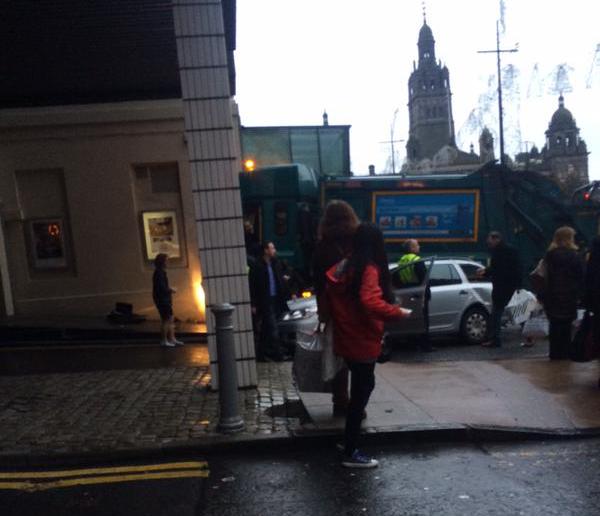
The health and wellbeing of driver Harry Clarke have been the focus of a fatal accident inquiry at Glasgow Sheriff Court over the past few days, following the Queen Street deaths on December 22 last year (see letsrecycle.com story).
Mr Clarke’s medical notes were shown to doctor Daniel Rutherford who prepared a report for the hearing on behalf of crash victim Jacqueline Morton’s family.
The inquiry heard how Mr Clarke had been at the doctor “over 300 times” since the 1970s, with various complaints including dizziness, vertigo and stress.
Dr Rutherford told the inquiry: “I don’t think I have seen a patient’s notes quite like Mr Clarke with so many of these. There’s something in every decade starting from 1970s and the common thread through all of it is that he’s a professional driver.”
In his evidence Dr Rutherford added he thought Mr Clarke should have been advised in 2010 not to drive, both cars and heavy goods vehicles (HGVs).
Blackouts
Dr Rutherford was shown a health declaration from First Bus in 2008, when Mr Clarke got the job as a bus driver, in which the driver claims not to have suffered from a number of conditions including fits and blackouts or anxiety or depression.
The doctor agreed with the Solicitor General, Lesley Thomson QC, that in his view Mr Clarke should not have got the job because of his health. He agreed that if Mr Clarke disclosed his medical history in December 2011 he “would never have been driving” in December 2014 and the disaster at George Square would never have occurred.
The inquiry also heard evidence from Professor Andrew Rankin, who in February and May this year diagnosed that the incident in December 2014 as a faint or blackout. At the time, Mr Clarke had denied having a previous blackout behind the wheel when he spoke to the cardiologist after the tragedy.
Professor Rankin told the inquiry he came to a diagnosis based on notes from the Western Infirmary hospital, a previous letter from Dr John Langan – a GP at Mr Clarke’s surgery – and Mr Clarke’s information to him.
The cardiologist wrote to the Baillieston surgery referring to an earlier incident in 2010 which said “he reports a general malaise and of feeling that he might blackout but denies loss of consciousness”.
‘Major concerns’
The professor said that had he spoken to Mr Clarke in 2010 and known he was seated at the wheel of a bus, he would have had “major concerns” and told him to report the matter to DVLA.
The inquiry heard another doctor the following day was told by Mr Clarke there had been no previous problems except a panic attack in 2004. A third doctor was told about a driving episode in 2008 but “no loss of consciousness” was noted.
Professor Rankin confirmed that he was told a different version of what happened in April 2010 than Mr Clarke told to various doctors at the time, that he did not blackout.
He also told of his ‘surprise’ when he saw Mr Clarke in May this year and learned his licence had been restored. The professor had advised him in February not to drive HGVs.
It was heard that on April 2, Mr Clarke contacted DVLA to check if he could reapply. The document noted: “Can’t see any reason why not. Sent out D2.”
Solicitor advocate Ronald Conway for Stephenie Tait’s family suggested Mr Clarke “can really not have been in any doubt” about the advice given by Professor Rankin.
The inquiry before Sheriff John Beckett QC continues.


Register for free to comment