

The savings message came from Peter Binham of consultants Faber Maunsell, who has been working on best practice work for vehicle management for the Department of Transport.
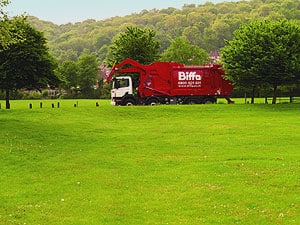
 Biffa's Peter Jones said there is carbon savings to be made by improving vehicle operations |
Addressing a Resource Recovery Forum conference in Winchester this week, Mr Binham said it was important to “monitor the amount of vehicle fills, reducing the amount of vehicles operating empty rounds and ensuring there are less deviations on route”.
He said doing so “would save industry million”, and he added that better organisation of vehicle fleets could also help towards tackling climate change. He estimated that by reassessing current practice and carrying out improvements, reductions in fuel consumption could be achieved which would reduce CO2 emissions by 221,000 tonnes a year.
Jones
The conference also heard from Peter Jones, director of external affairs for Biffa Waste Services, and from Keith Riley, managing director, technical services at Veolia Environmental.
Mr Jones also pointed to carbon savings that could be made but highlighted how traditional practices were often engrained within businesses. In order to get waste operators to shift their transport policies to more sustainable ones, he said that the industry “has a major task in terms of communications and dissemination.”
Mr Riley, also pointed to the importance of reducing carbon emissions for the waste industry: “We need to join up our carbon and our transport policy or we will lose the benefit of recycling in the first place.”
Targets
He continued by saying that there had been “massive changes in the waste industry in the last 15-20 years and that despite the increase of more sophisticated technology there continues to be a shortcoming in the system of just using the single measure of 'weight' to set environmental targets.
“The problem with having weight dominated targets is that even if the targets are met and waste is diverted from landfill, the problem of carbon emissions rising with the increase in numbers of vehicles on the road – the logistical side – is being ignored.”
Mr Riley added: “There has been a rapid development in the public's interest in climate change. People need to understand how resource management and climate change are on “the same agenda”. We need to optimise vehicle collections, reduce vehicle emissions, and optimise our carbon footprint.”


Register for free to comment