


Battery programme manager Chris Davey has claimed that, according to the latest figures from its UK battery recycling trials, the forthcoming targets to recycle batteries from 2012 are not “impossible.”

And, if these schemes were extended across the country, Mr Davey believes the directive's target of recycling 25% of household cells by 2012, which was previously believed to be almost impossible, is a realistic achievement.
He said: “Battery recycling in the UK undoubtedly has a positive future. Momentum is gathering behind each of our trials and this is evident in our current collection total of 1.75 million batteries. This success, combined with the contribution that other battery recycling initiatives and collection schemes are delivering, suggests that we could be credibly recycling at an average annual rate of 4% next year.”
“And, when you think what we could achieve if the trials are eventually replaced with regular nationwide collections, a target of 25% doesn't seem so impossible after all, ” he added.
Trials
Under the Battery Recycling trials, WRAP is working with a range of local authorities, not-for-profit organisations, retailers, Royal Mail and other companies to help the government identify the most effective way of recycling batteries.
The latest scheme, rolled out last month, involved the introduction of postal battery recycling in Eden and Dumfries and Galloway.
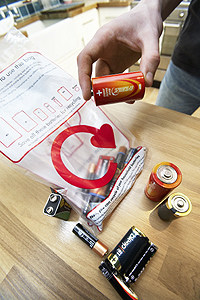
Under the trial, residents are encouraged to post a range of battery types, from AAA to D size, to recycling contractors. Special envelopes are available at public places including offices, schools and shops. The trial will run until March 2008.
Although still in their infancy, collection data and householder feedback has already provided insights into how the targets can be met.
Mr Davey said: “Our success can be attributed to two factors. Firstly, together with our various partners, we've worked hard to establish clear and regular communications with residents from each scheme. Secondly, the general public has lived up to its promise of welcoming battery recycling.”
“Potential problems”
However, despite this optimism, certain issues which could still stand in the way of nationwide battery recycling are yet to be resolved.
In April, Mr Davey warned that there were potential problems over how the Battery Directive would fit with the Waste Electrical and Electronic Equipment Directive (WEEE) such as how to handle batteries inside electrical products. (see letsrecycle.com story)
WRAP's battery programme manager also mentioned that some batteries qualified as hazardous waste and dangerous goods and were therefore subject to the Hazardous Waste and Carriage of Dangerous Goods Regulations from which the trials had been granted an exemption.
This may be a problem especially as the UK currently only recycles around 2% of its household batteries a year and sends around 600 million to landfill and therefore has a long way to go.
Mr Davey said: “The Battery Directive will require companies that produce, import or sell batteries to take responsibility for the cost of collecting and recycling them. These are tough targets, especially as the UK is almost tackling them from a standing start.”

Register for free to comment