


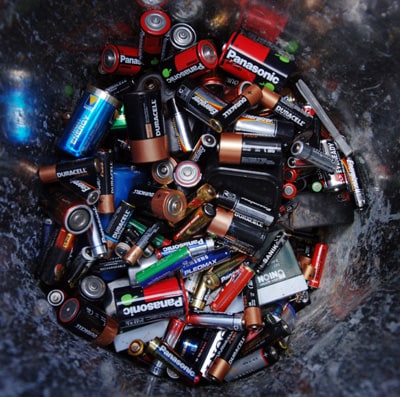
The regulations outline exactly how battery manufacturers will be expected to meet their producer responsibility obligations under the EU Batteries Directive – legislation which requires the UK to collect 25% of waste portable batteries by 2012 and 45% by 2016.

The publication of the regulations means that, from May 5, prospective compliance schemes will be able to apply for approval by the environment agencies and begin the process of formally recruiting producers as members and establishing collection and recycling arrangements for waste portable batteries.
However, the first compliance period for battery collection and recycling is not set to begin until January 1, 2010 – a situation that has previously prompted concerns that the UK, which has historically not collected batteries for recycling, may miss its targets under the EU Batteries Directive (see letsrecycle.com story).
Commenting on the regulations, business minister Ian Pearson said: “These regulations will help reduce the environmental impact of batteries and accumulators, which contain potentially harmful material.
“We are committed to helping minimise the impact on the environment of this kind of waste and this is the latest measure to help us achieve a cleaner environment,” he added.
The regulations confirm that there will be an exemption for small producers from having to fund the collection, treatment and recycling of waste portable batteries, although they will be expected to register with the environment agencies.
However, the registration threshold has been set at one tonne – significantly less than the three tonnes originally suggested by BERR in the consultation for the draft regulations that was published last December (see letsrecycle.com story).
This is likely to be well-received by some prospective compliance schemes, who earlier this year claimed that the three-tonne threshold would exempt a larger share of the UK battery market that BERR has estimated and, as a result, would place too heavy a burden on larger producers (see letsrecycle.com story).
Retailers
The regulations also confirm that, as outlined in the consultation, retailers will be obligated to provide in-store take back facilities to allow the public to recycle their waste batteries.
But, whereas the draft regulations suggested all shops selling more than 16 kilogrammes of batteries a year be expected to provide in-store facilities, the final regulations have set the threshold at 32 kilogrammes.
And, shops will not be expected to provide in-store take-back until February 1, 2010, a decision that has been welcomed by the British Retail Consortium (BRC), which last month warned that expecting retailers to introduce the facilities during the busy period in the lead-up to and just after Christmas.
The BRC's director of business environment, Jane Milne, said: “The government has listened to us and shown it can be responsive and flexible. Having this scheme ready to go right in the middle of the vital Christmas and New Year sales period would have been a nightmare for stores.
“Retailers are happy to play their part in increasing battery recycling but in-store take-back mustn't exclude other means. All the evidence shows kerbside collections of recyclables are easiest for customers and produce the best results. Developing home collection mustn't be ignored,” she added.


Register for free to comment