

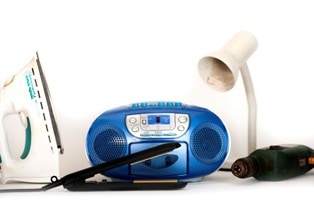
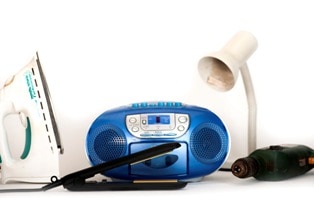
The report titled Realising the Reuse Value of Household WEEE centres on the quality of waste electrical items dropped at household waste recycling centres and collected as part of bulky waste collections, and found that 23% was either fit for resale and reuse or required only minor repairs before it could be resold.
Resale
WRAP calculates that the resale value of the reusable WEEE collected from HWRCs alone could total around 220 million, while the resale value of WEEE collected via bulky waste collections would be around 77 million. The calculations exclude the costs of repairing the items.
WRAP project manager for products and materials, Lucy Keal said: As youd expect, the resale values vary depending on the categories. Smaller items typically have lower reuse potential but the proportion that is reusable has a higher value than other categories.
While a smaller proportion of the small electrical items that were deposited such as mp3 players or hair dryers were found to be fit for resale, those that could be reused were found to be more valuable per tonne than larger domestic items such as refrigerators or washing machines.
Large domestic appliances such as washing machines offer good potential value, from reuse, use of parts or from scrap, make up 61% of the resale value from the bulky waste collections. Fridges and freezers offer particularly good reuse potential if theyre still working, said Ms Keal.
Research
Tests showed that, after cleaning, 12% of all WEEE was fit for resale, while a further 11% was suitable for resale once minor repairs were carried out, making up nearly a quarter of all the WEEE that had been collected.
Ms Keal said: This research demonstrates the crucial importance of promoting the reuse of WEEE. Were currently throwing away equipment thats in perfect working order, or could be easily repaired or refurbished for someone else to use.
Consumers often assume it will be cheaper to replace items rather than have them repaired, but its clear from our research that theres real value to be had from these discarded goods.
The research also looked at the reasons for disposal of different types of WEEE and found that as much as 28% of consumer equipment was disposed of because it was being replaced with a newer model, regardless of its condition. As many as 47% of those questioned at HWRCs felt that it was cheaper to replace rather than repair the item they were leaving.
The report has also assesses the potential value of WEEE disposed of through household kerbside residual waste collections. WRAP estimates that around 160,000 tonnes of WEEE is thrown away in household residual waste every year, and predicts that this will be made up largely of small WEEE due to size and weight restrictions. This small WEEE would be worth up to a potential 56 million if it were sold for reuse.

Register for free to comment