

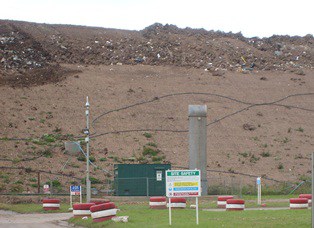
Under EU rules on hazardous waste, there are acceptance criteria for hazardous waste going to landfill. But, for a number of years, the Agency has been allowing wastes which exceed the Waste Acceptance Criteria by up to three times (3 x WAC) to go to landfill due to a shortage of alternative outlets.

However, last month (April 22), the Agency announced that it was reviewing the use of 3 x WAC in light of the waste hierarchy and the governments 2010 Hazardous Waste Strategy.
Principle 6 of the Strategy states that ‘The practice of relying on higher Landfill Directive waste acceptance criteria (derogation for 3x WAC) to enable hazardous waste to continue to be landfilled must end’.
Permits
In a briefing note sent to landfill operators, the Agency said: We intend to vary permits to remove the existing derogations during 2013 and not issue any new ones. We propose to use our problematic waste stream procedure to manage any wastes that require landfill but do not meet WAC limits.
We will be contacting operators of landfills for hazardous waste that have existing derogations to give them the opportunity to provide additional information prior to any site specific decisions being taken.
The Agency added that until the review is complete, producers whose waste does not meet WAC limits should use its problematic waste stream procedure to determine how to manage their waste.
Residues
“Members of ESAs Hazardous Waste Strategy Group are currently considering whether the timescale and process recently proposed by the Agency for withdrawal of the derogation is the right one”
Roy Hathaway, ESA
At present, there are eight hazardous waste landfill sites in the UK with permits to allow the landfilling of waste which exceeds Waste Acceptance Criteria by up to three times.
Material landfilled under such derogations is largely made up of air pollution control residues from hazardous waste treatment plants, which contains elements such as lead and chromium. In 2012, around 80-100,000 tonnes of this material was sent to hazardous waste landfill in the UK.
The move to scrap the derogations comes after the ESA, the trade body for the waste management industry, recommended in a report in January 2013 that the government remove the derogations for air pollution control residues (see letsrecycle.com story).
However, in the report it stressed that the timescale for these to be phased out had to give operators long enough to change their practices and for alternative treatment options to be brought forward.
Commenting on the latest review, Roy Hathaway from the ESA said: ESAs policy document on hazardous waste, Raising Standards, calls for Defra and the EA to withdraw the derogation allowing landfill of wastes which exceed the waste acceptance criteria, but makes clear that the timetable for doing this should be decided in consultation with the industry.
Members of ESAs Hazardous Waste Strategy Group are currently considering whether the timescale and process recently proposed by the Agency for withdrawal of the derogation is the right one.

Register for free to comment