


Researchers and engineers from the University of Exeter will be working with various industry organisations and the support of car manufacturers' trade body the SMMT to look into new uses for ELV plastics. The activities of the University itself will comprise about 250,000 of the project funds.
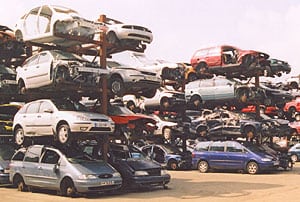 The average end of life vehicle has up to 12% plastic, which can be difficult to recycle |
Plastics make up as much as 12% of every vehicle, but can be difficult to recycle because they are designed to be strong, durable and light for a vehicle's life-time rather than to be easily recyclable.
About 2.2 million vehicles come to the end of their lives each year in the UK, and under Europe's producer responsibility legislation – the ELV Directive – 80% of these by weight must be recycled from January 2006 and 85% from 2015 (see legislation section).
Plastics
With about 75% of the average vehicle composed of easily recycled metals, some of the additional recycling that must be carried out will have to be plastics.
Dr Oana Ghita from the University of Exeter, said: “Conventional plastics, such as those in drinks bottles or packaging, can easily be melted and re-used, but this is not the case for some of the plastics used in cars.
| Related links: |
“The aim is to understand how exactly they need to be ground down to enable them to be made into new substances that compete with virgin material in engineering specification and price,” Dr Ghita added.
As well as the Society of Motor Manufacturers and Traders, other organisations supporting the research include Sims Group, Menzolit, Mitras Automotive, the British Plastics Federation, Brunel University, SP Technologies and European Friction Industries.


Register for free to comment