

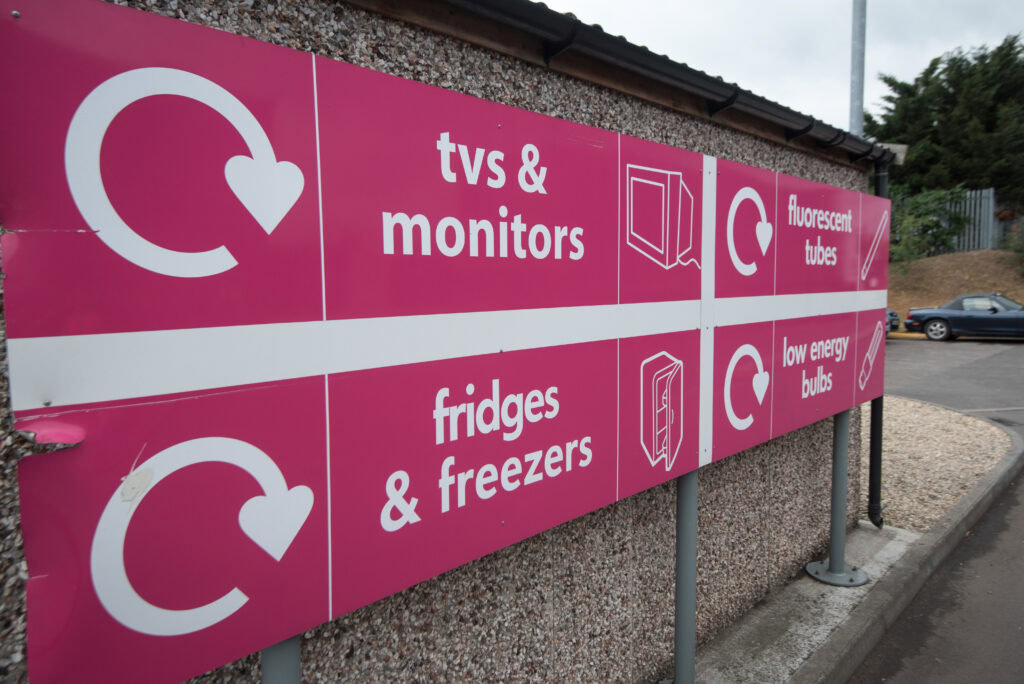
Warwickshire County Council has joined the list of councils suspending its collection services, citing the national shortage of specialist treatment capacity.
Councillor Darren Cheshire, Warwickshire’s portfolio holder for environment, heritage and culture, said: “We had hoped to avoid this scenario through our temporary storage and contingency measures, but the national processing network has simply reached its absolute limit.
“With no clear end in sight to the processing crisis, we have been left with no choice but to suspend the acceptance of all fridges and freezers at our HWRCs with immediate effect.”
The authority added that facility fires and plant closures had significantly reduced UK recycling capacity, leaving councils unable to process growing stockpiles of cooling appliances.
Similar measures have been put in place by other local authorities, with Oxfordshire County Council now accepting fridges and freezers only from Oxfordshire residents and Somerset Council imposing a limit of one fridge, freezer or other cooling appliance during August at any of its 16 recycling sites.
Meanwhile, Nottingham City Council continues to accept refrigeration appliances but has warned capacity is “extremely limited”.
Residents are currently restricted to disposing of one fridge or freezer per visit and one visit each week, with the authority warning it may have to suspend collections at short notice if conditions deteriorate.
NAWDO calls for government support
Following the recent closures, the National Association of Waste Disposal Officers (NAWDO) has called on the government to provide financial support for additional storage costs and help councils meet the extra costs created by the disruptions.
It also urged ministers to address what it described as a “broken system” by exploring additional UK processing capacity to reduce the likelihood of similar disruptions in future.
The association warned that, without government intervention, councils are likely to face growing stockpiles, more suspended collections and increasing pressure on storage capacity, creating a greater risk of fly-tipping.
The Environment Agency has already approved a new Regulatory Position Statement (RPS), allowing businesses to apply for permission to temporarily store fridges on unlicensed sites to ease pressure on the network.
The regulator and industry have also established a working group to identify short-term measures while capacity is restored.
Why is fridge recycling capacity currently limited?
Refrigeration appliances can only be treated at a small number of specialist Approved Authorised Treatment Facilities (AATFs).
Fridges and freezers contain refrigerant gases and insulating foams that must be removed under tightly controlled conditions to prevent emissions of ozone-depleting substances and greenhouse gases.
As a result, the UK’s fridge recycling network relies on a limited number of facilities equipped with specialist depollution and shredding technology.
That network has come under sustained pressure over the past two years following a series of commercial failures and operational incidents.
The hotter weather has also caused an increase in appliance replacement and, in some cases, reduced processing rates at treatment facilities.
As a result, some Producer Compliance Schemes, responsible for collecting and recycling waste electrical equipment under the WEEE Regulations, have suspended collections of fridges and freezers from local authority sites.
Read our full analysis here.


Register for free to comment