

If realised, the plans could potentially mean that there is a greater level of competition to UK exporters of waste fuels from exporters across the continent.
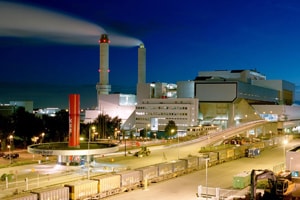
There is currently a strong demand for waste fuels from the UK – which exported around 2.75 million tonnes of refuse-derived fuel (RDF) to Europe in 2015 (see letsrecycle.com story).
Plans to look at ‘redistributing’ EfW capacity are outlined in the Commission’s roadmap ‘Exploiting the potential of Waste to Energy under the Energy Union Framework Strategy and the Circular Economy’ published this month. The document is likely to feed into future strategy on EfW following the adoption of the Circular Economy package in December (see letsrecycle.com story).
Targets
Under targets proposed by the Commission in December, Member States are expected to achieve an average 65% municipal waste recycling rate by 2030 – while reducing landfill to 10% by the same deadline.
The roadmap points to an ‘uneven distribution’ in shipment of waste to energy recovery, with countries such as Denmark, Sweden and Estonia operating incinerators at an overcapacity – particularly for municipal waste – while the ‘south eastern part of the EU’ shows no capacity at all with high landfill rates.
It follows criticism raised by FEAD administrative council member Peter Hodecek at last year’s FEAD annual conference, in which he indicated money invested by the EU in countries such as Romania and Hungary is not being spent on new recycling infrastructure and technology (see letsrecycle.com story).
The roadmap notes: “Taking into account relevant provisions in EU waste legislation and the need to prevent illegal shipments of waste, the Communication should thus consider to what extent shipments of combustible non-recyclable waste from Member States with a high landfill rate and insufficient WtE [waste to energy] capacity towards Member States with WtE overcapacities might contribute to better waste management and to a more efficient use of the network of WtE facilities in the EU.”
UK
At present the UK remains one of the largest exporters of RDF to Europe with the vast majority of shipments heading to Netherlands, Germany and Sweden.
And, while the country is nearing the end of a national infrastructure programme which has added hundreds of thousands of tonnes of domestic throughput capacity, some in the waste industry have pointed out that exports are unlikely to slow down given projected growth in residual waste arisings in the coming years.
The Commission adds that its roadmap needs to address new forms of energy recovery technology, such as gasification, which can facilitate the ‘abatement of air emissions and the minimisation of residual waste’.

Register for free to comment