

The welcome comes with the condition that the new packaging is clearly labelled and customers are educated about its composting potential.
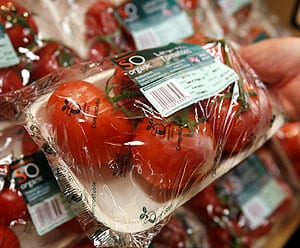
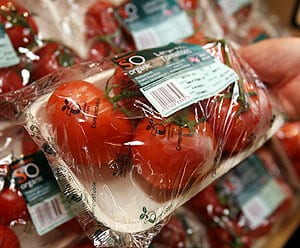 Compostable packaging already used on half of organic fruit and vegetables at Sainsbury's is being extended to ready meals and other lines |
Speaking to letsrecycle.com today, the Association praised the Sainsbury's decision on Friday to replace 3,550 tonnes of plastic packaging each year with a material made from maize, sugar-cane and starch.
However, the Association stressed that education was important to prevent green waste collections becoming contaminated with food waste and packaging waste the composting industry could not process.
Emily Nichols, the Composting Association's technical manager, said: “Promoting awareness and anything that triggers housholders' interest in composting in a positive thing. Yet Sainsbury's has a role to play in educating its consumers about the options for composting.
“Local authorities also need to advise housholders on whether compostable packaging is suitable for their composting container or only for home composting,” she added.
” At present, there is no way for compost operators to distinguish between compostable packaging and non-compostable packaging. “
– Emily Nichols, Composting Association
Degradable
Sainsbury's said on Friday that almost 50% of organic fruit and vegetables in its stores were already in compostable packaging, which they would increase to 80% by January 2007.
All of the supermarket chain's ready meal packaging will be compostable by September 2007, it declared, followed by organic sausages and organic whole birds in October. Sainsbury's claims the project is the “biggest ever initiative to eliminate plastics from Britain's High Street.”
Justin King, Sainsbury’s chief executive, said: “Our customers tell us that food packaging is extremely important to them and can determine what they buy, so our packaging team has been looking at ways to address these concerns.”
He explained: “In tests, most of the compostable packaging will break down quicker than a banana skin, yet it takes many years for degradable packaging or carrier bags to do the same. In some cases, for example on our organic tomatoes, absolutely everything can be composted at home – from the film and tray that keeps the tomatoes from being damaged, to the tomato vines.”
The Sainsbury's chief executive called for a united effort to promote compostable packaging. He said: “We urge the government to ensure that every home in Britain has a compost bin. We also support other retailers in putting more of their food in this packaging so that it becomes the norm.”
” We urge the government to ensure that every home in Britain has a compost bin. “
– Justin King, Sainsbury's
Logo
Sainsbury's will be printing a special “compostable” logo on its products and is printing more messages on its packaging to explain what customers can and can't recycle, such as “sorry, not recyclable”.
However, the retailer did not say whether consumers would be advised to compost the packaging at home, rather put items in their green waste collection containers – even though many composting sites are not prepared to deal with compostable packaging. (see letsrecycle.com story).
The Composting Association commented: “At present, there is no way for compost operators to distinguish between compostable packaging and non compostable packaging. The CA recommends that members of the public check with their local authority.”
BPF
Meanwhile, the British Plastics Federation attacked Sainsbury's for taking part in “green store wars”, and suggested that the incineration and recycling of plastic was a better option than composting biodegradable material.
| Related links: |
BPF director general Peter Davis said: “Depending on the packaging type, composting can produce increased carbon dioxide and methane emissions, both greenhouse gases. To divert more waste from landfill, we need to consider all the options, including increased recycling and energy from waste.”
Mr Davis said he was writing to demand a meeting with the Sainsbury's chief executive over comments made that plastics packaging is “unrecyclable”.


Subscribe for free