
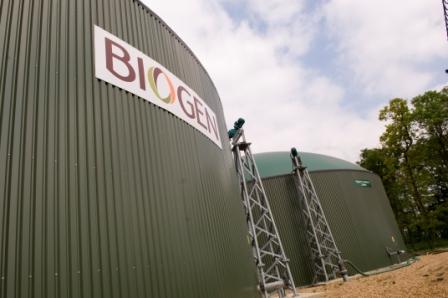
Northamptonshire county council has approved a proposal to build a facility capable of processing 41,000 tonnes of food waste a year at Westwood, near Rushden.
The gas will be used to generate 1.5MW of electricity per annum, with the digestate used as a fertiliser for adjacent farm fields run by Biogen's sister company, Bedfordia.
The planning approval comes less than a year since Biogen opened its first UK AD facility at Twinwoods in Bedfordshire, which processes 42,000 tonnes of food waste from manufacturers andlocal authorities in Mid Bedfordshire, Ealing and Luton (see letsrecycle.com story).
Biogen's managing director Andrew Needham said: “We are delighted that we have been given the green light with this project. It has been a long time in planning, but it was important for us to address all the questions and concerns of the local communities and the planning committee on AD as well as the benefits.
“This is the first of our “second generation plants” which we are planning to roll out to other sites throughout the UK,” he added.
Objections
During the planning application process,

Register for free to comment