

Definitions of household and non-household WEEE were amended in October after the UK’s classification of household and business WEEE were found to be at odds with that held by the European Commission.
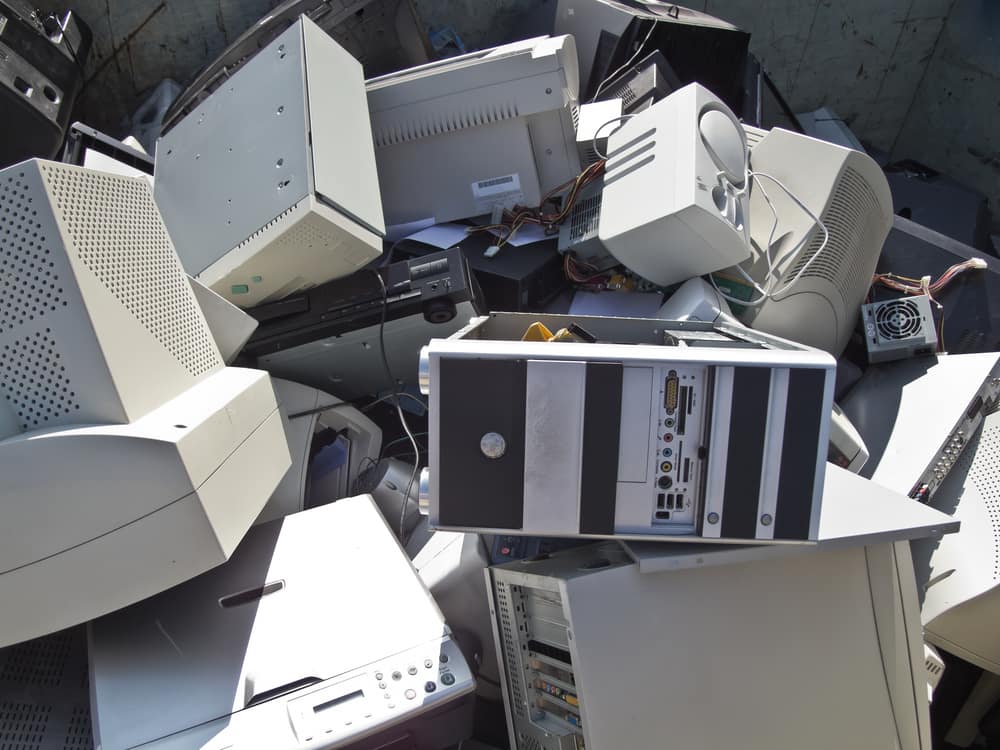
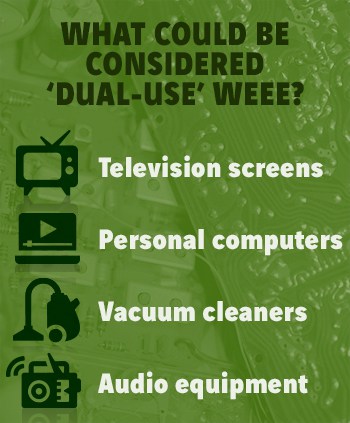
The difference centred on the interpretation of ‘dual use’ WEEE, which includes items such as PCs or television screens, which could conceivably be used in business or by consumers. In the UK, the definition was also qualified by the quantity of WEEE being presented for collection.
The new definition is in line with that held by the European Commission and states that any WEEE of a similar nature to that presented to householders, regardless of how much is presented, should be classed as household WEEE.
Producers
BIS has stated that this will apply for producers placing new items onto the market from January 2016. In a note issued to schemes and reprocessors this week, the Agency has stated that it will be applied for WEEE arisings with immediate effect.
It stated: “To date our interpretation of this definition has considered both nature and quantity in order to determine how WEEE should be classified.”
“On the 16th October 2014 BIS announced that their guidance will be revised to reflect a policy position which now focuses solely on whether EEE is likely to be used by both private households and users other than private households. The effect of this is to remove any consideration of the quantities arising when considering whether WEEE is B2B or B2C.”
The Agency added: “As a consequence of this change, the Environment Agency will be applying, with immediate effect, the revised interpretation for WEEE arisings and the type of evidence which can be issued against that WEEE.
“Thus where an AATF receives WEEE and there is evidence to demonstrate that the material is likely to be used by both private households and users other than private households, then the evidence issued against that WEEE can be B2C evidence in the relevant category.”
Businesses
When the new definition applies from 2016, it is expected that producers who are currently placing new products onto the market classed as business EEE, but whose products could be deemed as dual use would have to classify these products as B2C.
BIS has also suggested that this could be good news for operators of designated collection facilities (DCFs) and local authorities collecting business WEEE, as they would be able to allow a greater proportion of these to be financed by producers.
But, for some producers this is likely to result in greater costs for compliance with the WEEE Regulations, as they will be required to finance a greater proportion of the costs associated with meeting the household WEEE targets.

Register for free to comment