

Responding the Chancellor’s announcement today that seven PFI waste projects would have their funding removed (see letsrecycle.com story), the South London Waste Partnership (SLWP) and Gloucestershire county council were the first to voice their views.
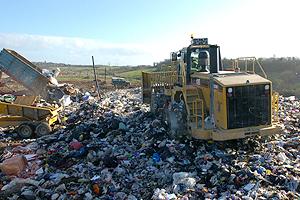
The South London Waste Partnership – which is comprised of Kingston, Croydon, Sutton and Merton – received £112.9 million in PFI funding in March 2009 to develop waste infrastructure. The four-council partnership reduced its shortlist of bidders for the contract at the end of last month to three firms – Veolia, Viridor and Waste Recycling Group (see letsrecycle.com story).
With PFI funding removed, the council revealed that it would now only sign up to a long-term deal if it still made economic sense.
Cormac Stokes, chair of the Partnership’s management group, said: “It goes without saying that we are disappointed. What is most regrettable is that the reasons behind the decision have not yet been made clear – we will be seeking clarification from Defra on this matter in order to understand the wider waste management picture.
Negotiation
“The Partnership’s negotiation team has been working hard with bidders over the last 14 months to ensure that the proposals being developed are affordable and within budget, even without PFI credits.
“We are still negotiating with bidders and will only sign up to a long term deal which we feel provides a value-for-money solution to the challenge of preventing waste from ending up in landfill.”
Meanwhile, Gloucestershire county council, which received £92 million in PFI credits in November 2008, expressed similar disappointment at the decision.
Councillor Stan Waddington, cabinet member for environment, said: “We knew the government had to take tough decision today to address the country’s deficit but we’re obviously disappointed. The need to find a sustainable alternative to landfill in Gloucestershire remains as we will very soon run out of landfill space.”
And, Milton Keynes and Northamptonshire councils – who were jointly procuring a long-term waste contract backed by £138 million of government money – have also expressed disappointment at the announcement.
Commenting on the announcement, councillor Heather Smith, cabinet member for waste at Northamptonshire county council, said: “This is disappointing for everyone involved in the project although we completely understand the need to review all spending in these economically challenging times.”
Transform
Elsewhere, a spokesman for the Project Transform scheme – which is comprised of Coventry city, Solihull metropolitan borough and Warwickshire county councils – said it was unaffected by the announcement as it had already taken the decision to cease the PFI process. The scheme was awarded £129.1 million of PFI funding in June 2009.
Coventry and Solihull earlier this month tabled plans to abort the project over costs (see letsrecycle.com story), with the partnership being effectively dissolved at a meeting of Coventry city council this week (October 19) where the council ratified a decision to withdraw from the scheme.
And, a spokesman for Cheshire East council, which is jointly procuring a contract worth £1 billion with Cheshire West and Chester council, told letsrecycle.com that the two local authorities had convened a special meeting for tomorrow to discuss next steps. He said: “There is no comment at the moment but after the meeting we will be able to say more.”
The project had, to date, received £40 million in PFI-funding support and had revealed a dependence on receiving over £100 million in PFI credits to help deliver the scheme at a meeting in June this year (see letsrecycle.com story).
Leicestershire county council, which received £86.6 million in PFI funding in November 2008, said that it would be assessing the impact of the Chancellor’s announcement but declined to confirm that it was disappointed.
A council spokesman said: “We have received a letter today advising that, as a result of the spending review, the government is no longer able to support Leicestershire’s investment in long term waste treatment facilities.
“We are currently reviewing the implications of this decision for Leicestershire. We will do our best to ensure that Leicestershire is able to meet its future targets to reduce the amount of waste sent to landfill, and continue to manage our waste in a way that is both financially and environmentally sustainable.”
The North London Waste Authority – which was provisionally awarded the largest allocation to date of PFI waste credits in March 2010 – said it would could not comment on losing its PFI credits until today (October 21).
Industry
Summing up the general mood, Clive Harris, waste policy advisor at the Local Government Association, attacked the government for not consulting more closely with councils over the decision to cut waste PFI funding.
The EU fines could be a lot larger than the money being saved here
Clive Harris, LGA
He also suggested that Defra was being complacent in its confidence that European landfill diversion targets would be met – warning that the country could face fines much larger than the amount of money being saved.
He said: “Around the seven PFI schemes that have lost we’re concerned the authorities weren’t consulted and the achievement of European targets is far from assured.
“The EU fines could be a lot larger than the money being saved here.”
The Local Authority Recycling Advisory Committee added that a lot of time had been “wasted” in scrapping PFI funding when some projects had reached the final stages of the procurement process.
Andrew Craig, principal policy officer at LARAC, said:”My big concern is this is a waste of time but in the long term they are pulling the plug on PFI doesn’t mean they are going to any public investment in waste management and they need to do public investment.”
Mr Craig also questioned the merits of the PFI system as a whole pointing to the fact that it excluded many, often smaller, companies from bidding.
He said: “I have thought for some time that PFI is not the best way of getting investment into waste management facilities, as we have got big contracts with a very small number of companies.”
FoE
Michael Warhurst, waste campaigner at Friends of the Earth, went further to say he did not mind that the PFI money had been withdrawn because he believed PFI had encouraged mass-burn incineration over recycling.
He said: “I think our general feeling has been that PFI isn’t particularly useful because it is driving people to building incinerators, so we are not particularly worried about that.
“I think how we are going to meet the diversion targets is massively dependent on what the government does next and to what extent they follow their ambition to go further on waste and recycling than Labour and we have no idea what that actually means.”


Register for free to comment