


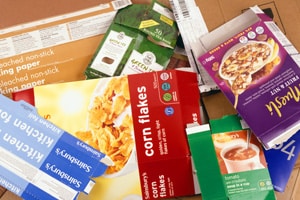
Both the exporters of recovered paper and the UKs largest domestic paper recycling business have emphasised the need for reductions in the levels of contamination in paper they receive for recycling.
The joint message came yesterday (July 9) from Nick Watson, senior accounts manager for ACN Europe, and Jim Malone, European sales and purchasing director for DS Smith Recycling.
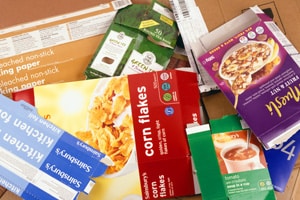
Mr Watson said his company, which is part of Chinas Nine Dragons business, wanted to see less contamination, less plastics, cans and other material in the waste cardboard it received. ACN Europe, he said, exported 1,000 containers a week from the UK. But, he pointed to an important change in the marketplace with the majority of goods packaged in cardboard which was made by his company in China, staying in China: 90% of what we produce now stays in China.
And, he predicted that at the end of 2013 the Chinese authorities will be assessing all the information they have gathered during the Green Fence imposed to stop exports of waste to the country and to reduce contamination.
Mr Watson explained: The Chinese will be collating all the information they can, whos exporting, whos fulfilling quotas, whos exporting quality and whos not. Taking all this into account, licences will be issued in the New Year.
Green Fence
He also noted that it was widely expected that the principles of the Green Fence would continue and these currently included a 1.5% maximum contamination rate.
‘A lot of collection schemes are not delivering the kind of quality my paper mills need.’
Dr Jim Malone, DS Smith
Mr Watson was speaking at the Resource Associations conference in London and was followed by his UK counterpart, Dr Jim Malone.
Dr Malone explained how DS Smith has 10 paper mills, two in the UK with its Kemsley mill in Kent handling one million tonnes of material a year and the company as a group handling over 5.4 million tonnes across Europe.
He too picked up on the issue of quality and warned: A lot of collection schemes are not delivering the kind of quality my paper mills need. Customers of paper mills demand a high quality product and measure that quality in parts per million, while Im expected to consider input material that has between 1% and 8% rejects. No other manufacturer would be expected to accept that level of rejects in their raw materials, so why should paper makers or any other material reprocessor?
And, he emphasised that DS Smith was aware that it would need to collect more cardboard and mixed paper from the domestic waste stream because of the impact of home delivery for products.
Incineration
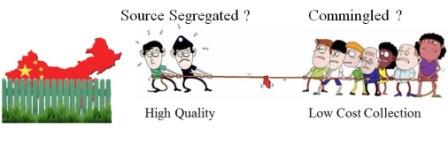
Dr Malone also had some tough messages on the threat to paper recycling posed by incineration. He warned: If we, as an industry and as a nation, walk blindly towards accepting incineration as a solution for the volumes of badly sorted recyclate rather than challenge our existing collection and sorting models then I consider this a form of environmental vandalism.
I passionately believe this is the wrong path and we must not walk blindfolded into a new resource wasting trap.
Recognising that incineration may have its place in a comprehensive waste strategy, Dr Malone said: this should not be overplayed or be allowed to mask poor recycling practices. While the UK looks to further develop its recycling infrastructure and best in class landfill diversion technologies we must be conscious not to use incineration as the catch all solution.
Related Links
We should be mindful of where it sits in the hierarchy and continue to work closely with consumer and commercial and industrial supply chains. The aim should always be to maximise waste minimisation opportunities while looking at the best ways of recovering a quality recycling product to deliver to reprocessors.
In his presentation on Paper and the UK Market, Jim Malone also highlights the need for quality, with his biggest challenge finding clean sources of material to feed paper mills.

Register for free to comment