



Councils could see their recycling rates increase if they introduce a separate container for the collection of carpet at HWRCs, according to Carpet Recycling UK.
The trade body for the carpet industry has called for councils to take advantage of the material stream. The comments came after CRUK published research last week (October 9) which found that its members worked with ten local authorities at 61 sites across the UK to divert the material from landfill.
CRUK currently has 74 members from throughout the carpet supply chain, including 32 of which are recyclers. 12 of these currently work with local authorities to remove carpet from household waste and recycling centres (HWRCs).
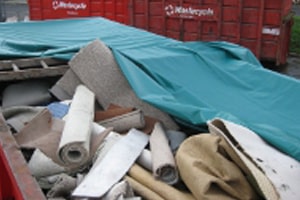
The councils provide dedicated bins for the collection of carpet at the sites, which currently sees almost 15,000 tonnes approximately 6.4kg per household – of material sent for recycling or to energy from waste.
Laurance Bird, director of CRUK, said: Currently an estimated 84% of end-of-life carpet still ends up in landfill and a significant proportion of this passes through HWRCs. This figure of carpet waste per household provides an excellent benchmark to demonstrate to local authorities what can be achieved by using dedicated carpet bins at HWRCs, especially with new outlets for waste carpet offering alternatives to landfill developing all the time.
At present, carpets can be sent for a variety of uses including: a fuel replacement in cement kilns; equestrian surfaces; plastic recovery; and, non-woven materials such as mattress pads and underlay. There are currently 32 outlets in the UK accepting waste carpet.
Potential
CRUK said councils could see an improvement in their recycling rate, and also help to divert material from landfill, by introducing separate bins for carpet collection.
Discussing the steps councils could take to increase carpet recycling Jane Gardner, scheme manager for CRUK, told letsrecycle.com: I think the key step that local authorities need to take to recycle carpet and to increase the value that can be gained from carpet waste in the future is to provide separate collection containers for carpets, keep the waste out of the general waste stream and keep the carpets dry if at all possible. Minimising contamination will ensure better quality carpet for recycling and will drive the carpet waste up the waste hierarchy.
Ms Gardner added: There is potential for this to expand and basically we estimate that although 16.5% of carpet is recycled the rest is still ending up in landfill. There is a lot of carpet out there which could be significant to local authorities. If they want to provide dedicated carpet bins they could increase their recycling rates. There are also new outlets for carpet developing all the time.
Related Links
She explained that at present there is no value to the material, so councils will have to pay to dispose of it. However, she said in most cases it is in line with the cost of landfill or just below, and as landfill tax rises it will become more financially attractive.
CRUK highlighted work undertaken by Nottingham city council and its waste partner Wastecycle to divert carpet from landfill from the HWRC on Redfield Road. Following the introduction of a separate container for carpet in 2011 the sites landfill diversion rate increased by 4% to 94%.


Register for free to comment