
Until a week ago, the term trommel fines was rarely heard outside a materials recycling facility (MRF) or a waste transfer station (WTS). But that was before Her Majestys Revenue and Customs (HMRC) issued the snappily titled Brief 15/12 Landfill Tax: material used on a landfill site; and classification of waste.
For a routine clarification about how landfill tax applies to certain materials it has sparked a huge story, with outspoken opposition being reported in depth but Im surprised that there have been so few voices speaking out in favour of HMRCs position, which seems to me to reinforce the pro-recycling intent of landfill tax (see letsrecycle.com story).
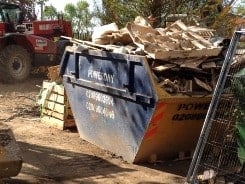
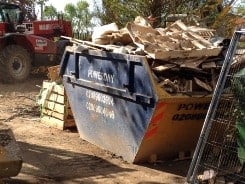
Some industry professionals have claimed that the new interpretation of the laws will be a disaster for skip operators, who will have to pass on higher costs. Others have talked of a hike in the gate fees charged by MRFs and WTSs in order to cover the additional costs of disposing of material they are unable to separate. Skip lorries blockaded Parliament Square, while Richard Hunt of the Plant and Waste Recycling Show (PAWRS) claimed he was looking to get Max Clifford on board, and that an injunction against the tax would be sought. Their protests led to a hurried further clarification from HMRC on 1st June, which some hailed as a victory although it seemed to change very little. So whats really going on?
History
HMRCs statement of its position follows from a case it lost against Waste Recycling Group (WRG) in 2008. The court ruled that inert material used for temporary structures (daily landfill cover and other onsite engineering) was not disposed of and therefore wasnt liable for tax. HMRC was ordered to repay tax to WRG; and 300 million of further repayments across the industry followed.
The government responded with new legislation in 2009 to clarify what would count as a use of waste, and then in 2011 with a revised classification of types of inert waste. The interpretation of these pieces of legislation is the subject of the recent HMRC Briefs, which covered two key points.
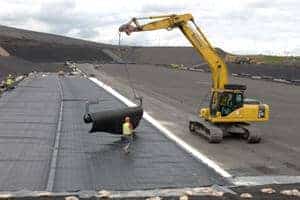
Following the WRG ruling, some operators had sought to claim back tax paid on top fluff layer material used to provide a protective layer between the landfills cap and the main body of waste. But, after discussions with operators and the Environment Agency, the HMRC concluded that this material should be (and always should have been) liable to Landfill Tax as the waste material is disposed with the intention of discarding it and disposing of it as top fluff doesnt constitute a use.
Some WTSs and MRFs had classified fine residues, known as trommel fines, grit and screenings, as inert material. HMRCs first brief stated that Any residue from treated transfer station waste that is consigned to landfill will be very variable and it will be impossible to determine the origin and exact nature of the source material [T]hese are not qualifying materials as listed in the Schedule to the 2011 Order. In Brief 18/12, however, it made it clear that if fines were made up from materials all of which qualify for the lower rate and in these circumstances the fine would qualify for the lower rate providing the necessary evidence could be demonstrated. The strong presumption seems to be, though, that this evidence will not be easy to provide.
I can see the argument either way on top fluff this layer is needed, but it is composed of material that has been accepted for disposal. But the case on fines seems unarguable. All of the evidence is that the fines typically have substantial organic content, and theres no reason for them to be routinely classified as inert.
Overcoming inertia
So, what is the impact of these clarifications, and are they to be welcomed or lamented? I think there are two key points.
MRFs and WTSs that are producing large amounts of fines but are locked into fixed price contracts with clients will be squeezed, and may well look to pass on costs where they can. It is understandable that the skip operators are unhappy theyll be at the sharp end, passing on increased costs to customers. Inert landfill operators may see a reduction in the volume of material they receive; non-hazardous sites will not be affected by tax (they simply collect it and pass it on to the HMRC), and will only suffer a reduction in income if they have been charging a higher gate fee for inert material.
It will be the sorting facilities that produce the largest amounts of fines that experience the greatest impact. Some facilities are more efficient than others they separate more material and leave fewer fines. There is concern in some parts of the industry that there are firms that are simply shredding anything that cant easily be sorted, and if that material has been passed off as inert fines, it undermines the case for investment in sorting technology.
Secondly, what will the reaction be? A lot depends on how wide the window opened by Brief 18/12 proves to be. By accepting that some fines may be inert, HMRC is placing a heavy emphasis on the enforcement of waste transfer notes by the Environment Agency, as there will be a significant financial incentive for WTSs and MRFs to continue to describe material as inert wherever possible. With strong enforcement, the market will shift in favour of investment in better sorting technology; without it, we can expect something more like business as usual.
My fear is that the Agency lacks the resources and the will to enforce effectively. If that proves to be the case, we will be reliant on the accuracy of waste transfer notes and the inspections carried out at landfill sites. Environmentally minded people should be hoping that HMRC shows its teeth and prevents recycling from being undercut through the perpetuation of the current approach to fines.
A version of this article first appeared on www.isonomia.co.uk.

Register for free to comment