


The latest data was described by WRAP as showing the advantages that can be gained if waste is not landfilled.

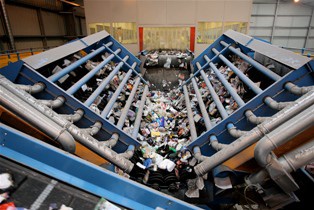
The study, produced by Eunomia, shows that gate fees for materials recycling facilities (MRFs) are now at a low point with more authorities being paid for their materials, often under contracts linked to the value of recyclables.
Cost-effective
Steve Creed, director of market economics WRAP, said: This years Gate Fees Report highlights the growing number of cost-effective alternative waste management opinions to landfill, underlining the economic and environmental savings we can make if we do not bury our waste in the ground.
MRF gate fees have continued to fall and are substantially lower than reported in our previous surveys. Many local authorities say that they are either not paying gate fees, or are receiving payment for their recovered materials.
The report highlights include the median gate fee for MRFs was down to 9 per tonne from 15 per tonne in last years report.
One MRF expert told letsrecycle.com today that some local authorities have been getting very good deals with many authorities being paid for material, with one recent contract in Essex thought to have been for a payment of as much as 60 per tonne.
The replacement of gate fees by some companies to making payments for material has arisen partly because of competition in the municipal sector for recyclables as new MRFs are built and because of the upturn in markets 12-18 months ago.
The growing number of MRFs includes the UPM facility in north Wales along with modernised existing plants such as the large Viridor MRF in Kent.
Caution
Viridor is considered to be the largest MRF operator in the UK and has recently cautioned that while the prices for recyclable materials such as paper and plastic bottles were high in early 2011, the outlook for the remainder of 2012 is far more cautious. The company links some of its contracts to a base price and payments to some local authorities are expected to fall if the market prices for materials continue to decline.
The WRAP report also reveals data from the Department for Environment, Food and Rural Affairs which shows that new larger incinerators are likely to offer the lowest prices.
Related links
Calculated at 2012 prices, incinerating of waste can be carried out for as low as 56 in plants with a capacity of 200,000-300,000 tonnes although the top price reported is almost double this at 102. No information is given by WRAP or Defra into the large variation between the two figures. The lowest overall band for incineration comes from the very largest plants.
Other key findings identified by report include:
- The median gate fee for OAW (Open-Air Windrow composting) is little changed from last year. OAW gate fees have been more-or-less constant for several years.
- IVC (in-vessel composting) gate fees vary substantially with a key factor being the composition of the material received by facilities. Food waste mixed with garden waste and card attracts higher gate fees (median gate fee of 55 per tonne), followed by food waste only (median gate fee of 49 per tonne) and mixed food & garden waste (median gate fee 44 per tonne). These are in line with last years report. However, the report highlights a substantial drop in IVC gate fees for garden waste, which are down by around 10 to 25 per tonne.
- For anaerobic digestion (AD) the median gate fee is 41 per tonne (with a range from 35 to 60 per tonne). This compares with a median figure of 43 per tonne in 2011 (range 36 to 64 per tonne). The median AD gate fee is now lower than the median gate fees for food waste only and for mixed food & garden waste at an IVC facility. However, because the AD industry is still developing these findings are based on a relatively small sample and therefore need to be interpreted with caution. Operators of AD facilities cited direct competition for feed stocks, energy prices, and broader economic pressures as factors likely to influence future AD gate fees.

Subscribe for free