
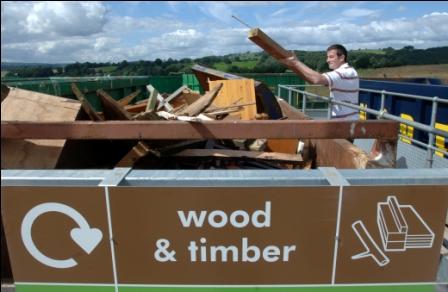
Wood recyclers yesterday (September 14) expressed their disappointment after efforts to produce a recovered wood Quality Protocol faltered for the second time around.
The protocol, which is being developed under the Waste Quality Protocols project by the Environment Agency and WRAP, would define the point at which recovered wood would no longer be classed as a waste.
This is important because it would mean that quality products made from recovered wood – such as animal bedding and biomass fuel – would no longer be subject to waste legislation.
However, speaking at the quarterly Wood Recyclers' Association (WRA) meeting in Birmingham yesterday, Debbie Palfrey, recycling industries sector specialist at WRAP, said that it was not proving easy to develop.
This, she said, meant that plans to develop the UK's first quality standard for wood – which was intended to inform the protocol and be developed alongside it- had also been put on hold.
The problems come after an initial attempt to develop a recovered wood protocol in 2007 failed due to a lack of data (see letrecycle.com story).
However, Ms Palfrey insisted that the project had not been dropped and appealed for feedback and data from WRA members to help drive the work forward.
She said: “It's a very fluid situation with the Quality Protocol. The waste protocols team are very supportive of having a Quality Protocol so by no means we are saying the door is shut, the door is not shut but we are experiencing some difficulties.”
Responding to this, Peter Butt, secretary of the Wood Recyclers' Association, said: “This is obviously not the news we were hoping for. We need to look at this again and see what needs to be done to make it work.”
Problems
In order to produce the Quality Protocol, the EA and WRAP have been developing draft financial impact assessment and risk assessment documents, to look at what benefits and risks a protocol might produce.
The draft financial impact assessment was sent out earlier this week to members of the Technical Advisory Group which is informing the development of the wood protocol.
The two documents, while still subject to change, revealed various problems, Ms Palfrey explained. First, as the end markets for recovered wood are so established and wood recycling is widespread, the financial impact assessment found that a Quality Protocol would not result in any significant savings. For the same reasons, it found that it would result in very few extra carbon savings – something which is important to the government.
The risk assessment, meanwhile, unearthed “more complex” problems, Ms Palfrey said.
Importantly, it found that using recovered wood for animal bedding, panelboard manufacture, biomass feedstock and landscaping and mulches could pose a risk to the environment.
For biomass, she explained that the range of potential contaminants in recovered wood feedstock made it hard to monitor, while for animal bedding she said that there were unknown variable ingestion rates of contaminants for different kinds of animals.
For landscaping and mulches, meanwhile, she pointed to a legal ruling relating to the definition of waste in 2007 (see letsrecycle.com story) which meant that material could only be classed as a non-waste if it met the standard of its virgin equivalent.
To resolve the problems, she said that imposing particular sorting and segregation methods and testing regimes “may give the Environment Agency some comfort” but said that was only a “possibility.”
Ms Palfrey told letsrecycle.com: “It's the diversity of wood that makes it difficult. A certain percentage is treated. You can tell by looking at it if it is treated but it is harder to tell what it is treated with. Until we can get a grip on what is treated and what is not it's hard to look at the end uses.”
Meeting
At the meeting, WRA members also heard about health and safety in the sector from Peter Hodgson, from Sureteam, and also about insurance services from David Bearman, from Wasteinsure, the association's newest member.
The WRA's membership has now grown to 68 companies.

Register for free to comment