


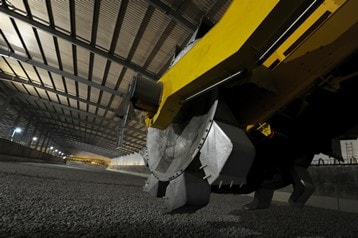
Cambridgeshires residual household waste is once again being processed at AmeyCespas mechanical biological treatment (MBT) plant at Waterbeach after the facility was forced to shut down last year.
A mechanical failure to compost-turning equipment at the MBT plant in September 2012 had forced the county council to send around 2,200 tonnes of household waste to landfill each week (see letsrecycle.com story).
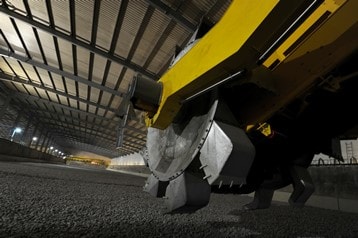
However, waste management firm AmeyCespa confirmed yesterday (December 4) that the 200,000 tonnes-per-year capacity MBT plant began processing waste earlier in the autumn, gradually increasing its intake so that it is now once again treating all of the countys waste.
This follows a contract AmeyCespa signed in March 2013 with Spanish equipment manufacturer Taim Weser to provide the new composting machinery to replace that which had failed at the MBT plant (see letsrecycle.com story).
The MBT facility at Waterbeach was built as part of a 28-year, 731 million PFI contract between Cambridgeshire county council and Donarbon (later acquired by AmeyCespa) for waste treatment and disposal (see letsrecycle.com story).
Process
The plant is designed to extract recyclables from the residual waste using mechanical separation before breaking it down biologically. The process reduces the wastes mass by approximately 50%, with just the remaining compost-like output sent to landfill.
‘Not only have we replaced the turning machinery which failed in 2012, but we have also taken the opportunity to make improvements to the mechanical treatment element of the plant.’
Paul Greenwell, managing director, AmeyCespa
Paul Greenwell, managing director of AmeyCespa which is owned by Spanish multi-national Grupo Ferrovial said: We are happy to confirm that the MBT plant is once again processing black bag waste from homes across Cambridgeshire.
Not only have we replaced the turning machinery which failed in 2012, but we have also taken the opportunity to make improvements to the mechanical treatment element of the plant. This allows us to further maximise the benefits from the countys household waste.
A 60,000 tonnes-per-year capacity materials recycling facility (MRF) also opened at the Waterbeach site in February 2013 to sort South Cambridgeshire district councils dry recyclables (see letsrecycle.com story).
Cambridgeshire county councillor Mathew Shuter, cabinet member for enterprise and waste, said he was pleased that the MBT plant was now processing waste again.
He said: AmeyCespa has worked very hard with their contractors to carry out the significant work which has brought the facility back into operation. It is important to remember that throughout this time the authority and local council tax payers were protected from any additional costs incurred because of the breakdown due to the robust contract we have in place.
Legal action
AmeyCespa is currently in the midst of ongoing legal action against BAM Nuttall, the contractor which installed the previous compost turning machinery which failed at the Waterbeach MBT plant.
The machinery was manufactured by Austrian firm Kelag Umwelttechnik.
Surrey-based construction provider BAM Nuttall won a 41 million contract to deliver the MBT plant in 2008 and was the principle contractor managing the supply chain including the composting process, design and machinery from Kelag.
A 200×50 metre, steel-framed building at the Waterbeach MBT facility was hit by a fire in April 2013, affecting around 800 tonnes of organic content (see letsrecycle.com story).

Subscribe for free