


While overall UK emissions continued to fall last year, the data from the Final UK Greenhouse Gas Emissions Statistics highlighted the ongoing significance of waste treatment and disposal, alongside the growing role of energy from waste (EfW) within the electricity supply mix.
Emissions from the waste sector
The waste sector covers emissions from the treatment and disposal of solid and liquid waste, including landfill, composting, incineration without energy recovery and wastewater treatment. Emissions from EfW facilities are counted within electricity supply rather than waste.
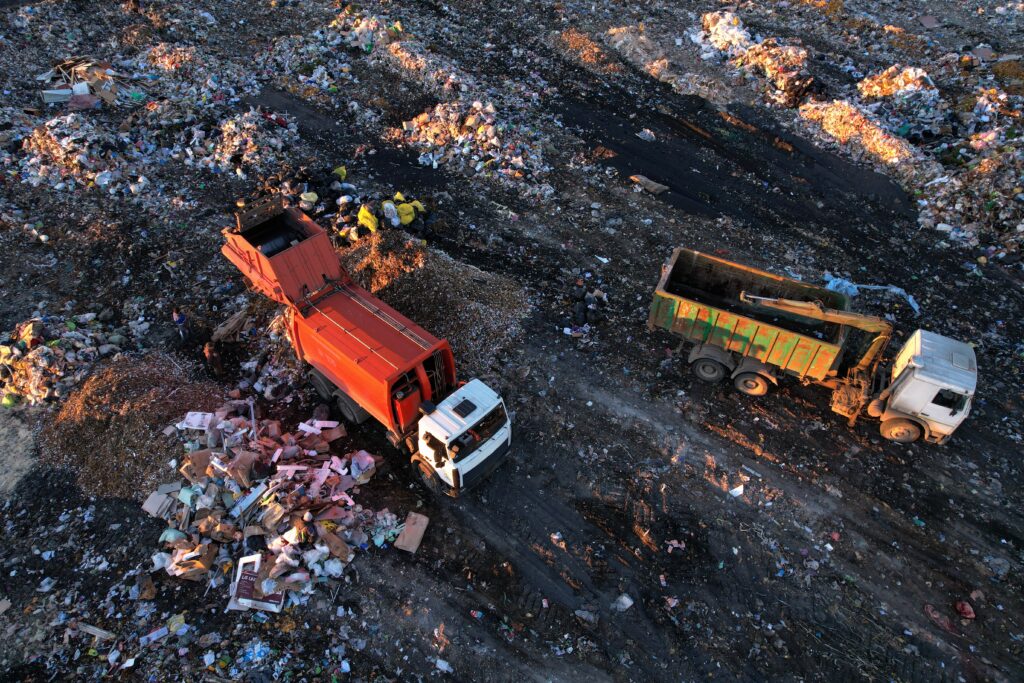
Landfill remained the single largest source of waste sector emissions in 2024, accounting for 55% of the total, while wastewater treatment contributed a further 34%.
Other sources, such as composting and non-energy-recovering incineration, made up the remainder.
Between 2023 and 2024, emissions from the waste sector fell by 4%, driven largely by an 8% reduction in landfill emissions.
Over the longer term, waste sector emissions have fallen sharply, with 2024 levels 61% lower than in 1990.
The government attributed this decline to several factors, including higher landfill standards, reduced landfilling of biodegradable waste, and increased capture and use of landfill gas for energy generation.
Waste incinerator takes on bigger role
Emissions linked to waste are increasingly visible within the electricity supply sector.
In 2024, electricity supply was responsible for around 10% of UK greenhouse gas emissions overall, with carbon dioxide accounting for almost all of the total.
Municipal solid waste accounted for 19% of electricity supply emissions, making it the second-largest source after gas combustion.
This comes against the backdrop of a sharp decline in fossil fuel use, with electricity supply emissions falling by 16% between 2023 and 2024, largely due to reduced gas and coal use at UK power stations.
Waste is also taking up a growing share of electricity-related emissions over the longer term.
Emissions from municipal solid waste used in power generation rose from 5.6 MtCO₂e in 2019 to 7.3 MtCO₂e in 2024.
By contrast, emissions from gas-fired generation fell significantly over the same period, dropping from 44.9 MtCO₂e in 2019 to 28.3 MtCO₂e in 2024.
This trend reflects both the rapid decarbonisation of the power sector and the expanding role of EfW plants within the UK’s residual waste infrastructure.
What were the overall UK GHG emissions?
Total UK territorial greenhouse gas emissions were estimated at 373 million tonnes of carbon dioxide equivalent (MtCO₂e) in 2024, representing a 3% decrease compared with 2023 and a 53% reduction since 1990.
Within this total, the waste sector accounted for around 6% of emissions, placing it behind domestic transport, buildings, agriculture, industry and electricity supply, but ahead of land use, land use change and forestry (LULUCF).
Methane remains the dominant greenhouse gas from waste, accounting for 77% of waste sector emissions in 2024, reflecting the continued impact of landfill and wastewater treatment.
Minister for Climate at DESNZ Katie White commented on the statistics: “The science is clear, from record summer heatwaves to frequent flooding, climate change is being felt by families, businesses, and communities across the UK.
“Today’s stats show that Britain can be proud of its climate leadership, while also growing our economy by over 80% since 1990.”


Register for free to comment