


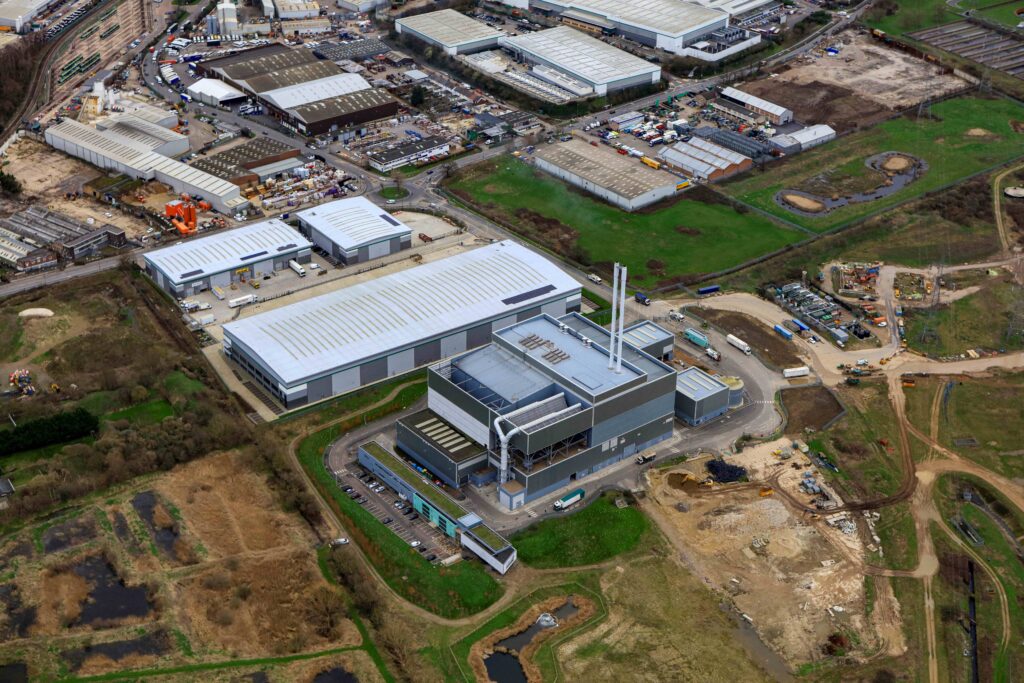
On Sunday, the Telegraph published an article which criticised the Viridor Beddington EfW site.
Much of the article centres on claims that EfW produces greenhouse gas emissions comparable to coal power, a comparison the industry sees as misleading.
Media narrative ‘cyclical, yet erroneous’
Responding to the renewed coverage, ESA Executive Director Jacob Hayler stated: “It’s unfortunate that we continue to see this same cyclical, yet erroneous, story published by various mainstream media – often under the same hackneyed headline.
“It is evidence only of the cycle of propaganda pushed by anti-incineration campaigners, but the fact that they keep rehashing the same old ground shows just how out of ideas they are.”
Hayler said the portrayal of EfW as inherently “dirty” ignores its “core role” within the waste system – namely, replacing landfill as the primary outlet for residual waste.
He added: “Recovering energy from residual waste is just one part of a wider waste eco-system and the primary purpose of this technology has been to drive millions of tonnes of residual waste out of landfill, which it has successfully done over the past twenty years.”
‘EfW does not impinge on recycling performance’
Hayler also challenged the idea that EfW competes with recycling, describing such claims as “misunderstandings of how the waste system actually functions”.
He said: “The availability of EfW does not impinge on recycling performance, as evidenced by the majority of the best performing local authorities for recycling, which also rely on EfW for their residual waste treatment.”
Instead, Hayler stated that stagnant recycling rates reflect broader structural issues in secondary material markets.
Particular comparisons have been drawn between EfW and other industries scrutinised for pollution, such as the water industry.
Hayler explained: “Unlike the failing water industry, energy recovery facilities are not regulated monopolies and instead operate in a competitive environment which drives high standards and delivers continual investment in vital infrastructure.
“Scaremongering media coverage of this nature does an incredible disservice to the thousands of proud and dedicated people who work around the clock all year long to keep these vital facilities operating – ensuring millions of tonnes of the nation’s rubbish is safely put to good use.”
Focus on Beddington ERF
Viridor’s Beddington Energy Recovery Facility (ERF) has gained attention in this area, with critics of the facility referring to it as “a symbol of so much that is wrong with England’s efforts to dispose of its mountains of household waste.”
Sutton Council recently urged the Environment Agency (EA) to reject Viridor’s application to increase capacity at the facility, citing community concerns and raising questions about the site’s emissions reporting history.
Viridor has previously emphasised its “zero-breach policy” and said it “takes its environmental responsibility seriously.”
The company disputed claims that it had acted in bad faith to the local community, explaining that it hosts quarterly Community Liaison Group meetings and supports local organisations through The Beddington Community Fund.
In March 2024, the firm identified an issue involving under-reported NOx emissions data, an error it says stemmed from an accredited third-party contractor.
A spokesperson for Viridor previously told letsrecycle.com: “Viridor discovered this accredited contractor responsible for emissions monitoring had put incorrect functions into the system, causing it to report inaccurate data.
“This contractor subsequently admitted liability and concluded its under-reporting was a direct result of ‘human error’.”
Viridor self-reported the issue to the EA, commissioned an independent investigation and implemented additional training and oversight requirements.

The actual facts are, there is far too much EfW capacity and the industry is in freefall with national waste reduction targets, the changing composition of waste, and impending near elimination of biodegradable material from landfill. It is difficult to see anything other than a reduction in EfW capacity, there isn’t enough feedstock and EfW facility’s are already competing with each other in a race to the bottom. The Clean Power 2030 Action Plan is clear: Energy from Waste (EfW) is primarily a waste management solution and will not be included in our definition of the power sector for the purposes of Clean Power 2030 (including those with carbon capture).