

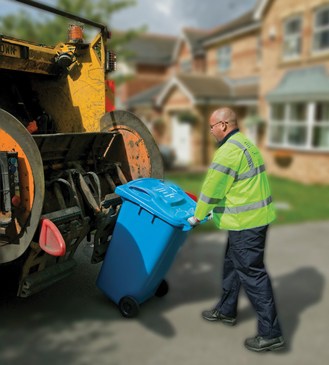
Hull city council has begun work to improve the quality of recyclable material collected from residents at the kerbside, in a bid to safeguard the future of commingled collections within the city.
A report circulated to councillors claims that as the commingled service is extremely popular with residents, the council must produce recyclables of sufficient quality for it to be attractive to MRF operators.
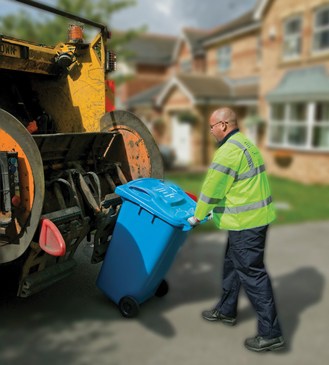
And, following a rise in its recycling contamination levels last year, the council states that being able to demonstrate that it can produce high quality recyclable material will form part of our evidence base from 2015 to comply with TEEP requirements.
Under the revised EU Waste Framework Directive, from January 2015 local authorities will be legally required to collect materials separately unless it is not technically, environmentally and economically practicable (TEEP) to do so.
This is alongside the introduction of the MRF Regulations, which come into force from October this year (see letsrecycle.com story), also aimed at boosting the quality of recyclate produced in the UK.
Fortnightly service
The Hull report follows changes to the councils in-house collection service in May 2013, which saw the collection of residual waste in black wheeled bins move from weekly to fortnightly. This, the report claims, has helped save 1 million over the last year due to reduced collection vehicles, staff and waste disposal savings.
‘To support recycling performance, the council must protect the blue bin service which is extremely popular with residents. To do this we must produce recyclables of sufficient quality (i.e. minimise contamination) for it to be of interest to MRF operators.’
Hull city council report
However, the changes also saw a rise in contamination of fortnightly blue bin recycling collections, which led to an increase in charges made by the materials recycling facility (MRF) operator.
As a result, the council has been seeking to clamp down on contamination in its fortnightly-collected blue recycling bins in order to boost the quality of material collected at the kerbside, with as many as 300 blue bins removed from residents earlier this year due to repeated contamination.
Prior to the collection changes, the document reveals that contamination in blue bins was around 8%, which was acceptable to the MRF, but this level increased to around 15% after the service changes.
Campaign
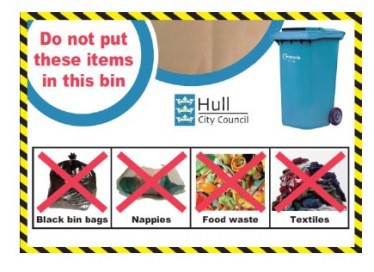
The campaign also saw details of contaminated bins recorded digitally by collection crews, with this real-time information used to tailor communications to repeated contaminators.
And, the report states that the introduction of a fortnightly refuse collection service has achieved a significant reduction in the amount of kerbside residual waste collected alongside record high recycling rates.
Related Links
Hull councils reuse, recycling and composting rate in 2012/13 was 48.5%, but provisional figures suggest the rate increase to 52.2% in 2013/14.
Since the change in service, the amount of recyclables collected has increased by 11% – 2,356 tonnes with a total of 23,716 tonnes of material sent to the MRF.
However, random sampling found an increase in contamination, with the main contaminants in blue bins comprising of textiles, food and nappies. Sampling of black refuse bags also found average contamination levels of 42% due to recyclable materials being disposed of in black bags rather than being recycled.


Register for free to comment