


Owned and operated by Suez, the Rugby SRF plant has been two years in development in partnership with cement manufacturer Cemex, with the two firms having agreed a 25-year fuel supply deal in 2012 for the cement production facility.
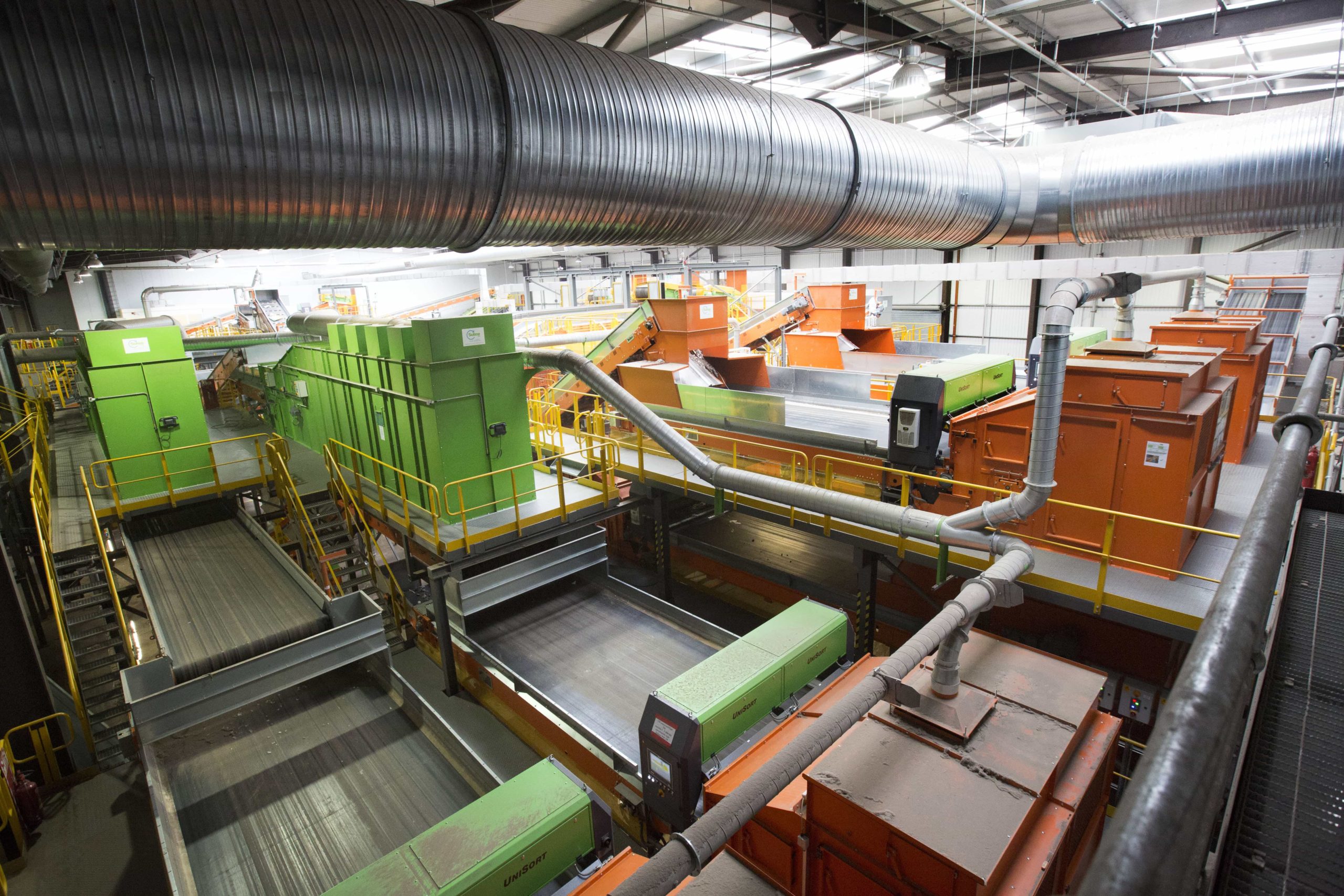
Photo credit: Paul Box
Under the deal, Suez will supply Cemex with up to 240,000 tonnes of SRF each year as a fossil fuel replacement to meet the demands of the cement kiln. 200,000 tonnes of this will be produced at the Rugby SRF plant, with the remaining 40,000 tonnes produced at Suez’s SRF plant on Landor Street in nearby Birmingham.
The SRF, labelled by Suez as ‘Climafuel’, is produced at the new Rugby facility from commercial and household waste collected by the firm from across Warwickshire, Northamptonshire and the wider Midlands area.
Processing
Overall, the Rugby SRF plant has the capacity to process up to 300,000 tonnes of residual waste each year, with around 70% of the input material coming from businesses in the region. The remaining 30% is household waste – most of which comes from Northamptonshire county council, according to Suez.
Waste is first brought into the reception hall at the facility, before it is sent through bag splitters, then through a range of trommels, eddy current separators and other machinery to separate out fines, oversize and recyclable materials such as metals, cardboard and plastics.
Once recyclable materials are extracted from the waste, the material is shredded into the correct size and regulated for moisture levels so that the remaining material fits the ideal fuel specification for Cemex. The finished SRF produced is then transported to the kiln opposite on articulated lorries.
Suez leased the land from Cemex for the SRF plant in 2013, and construction of the facility began in 2014. The commissioning of the processing equipment took place earlier this year.
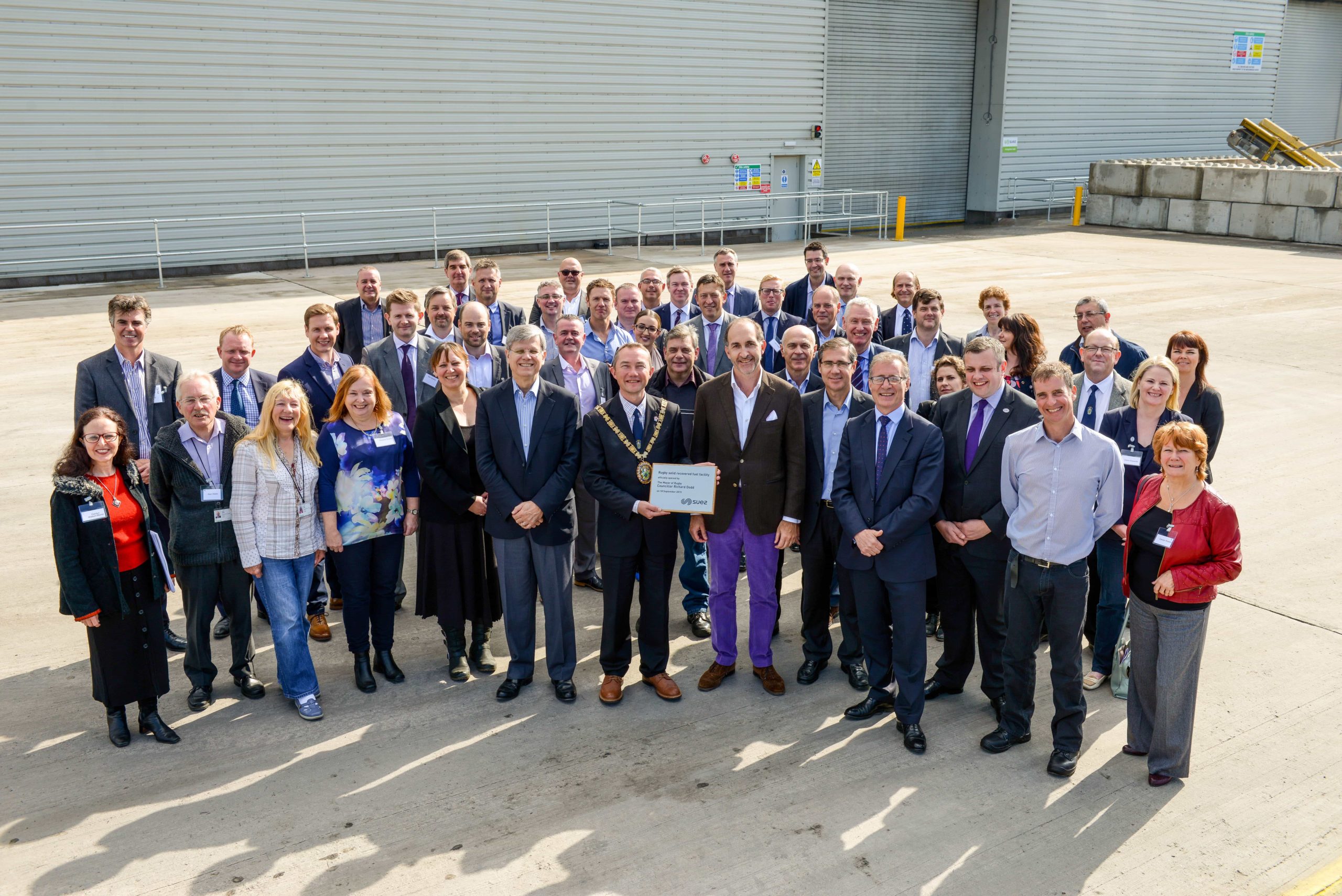
Senior management from both Suez and Cemex, as well as the Mayor of Rugby, were all on hand to officially open the SRF plant on Friday (September 18).
Speaking at the opening – which coincided with the first day of the 2015 Rugby World Cup – David Palmer-Jones, chief executive of Suez’s Recycling & Waste Recovery UK division, said: “I cannot think of a better place to come today as England begins to host the World Cup.”
Rugby
With Rugby being the birthplace of the sport which takes its name, self-confessed fan of the game Mr Palmer Jones took the opportunity to highlight the “teamwork, hard work and innovation” he believed were inherent in both rugby and the business relationship which fostered development of the SRF plant.
He also explained that the contract between Suez and Cemex was unusual, as the deal is believed to be the first 25-year deal of its kind in the UK outside the PFI (private finance initiative) mechanism.
Mr Palmer-Jones then went on to say that the SRF facility was another “representation of the shifting mindset in the industry – we are moving on now to an industry which manufactures products”.
He said: “We have left the waste industry and joined the manufacturing industry.”

Register for free to comment