

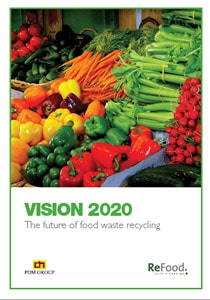
The comments form two key pillars of the Doncaster-based firms Vision 2020 manifesto document, which outlines what it believes to be the key issues for food waste recycling in the UK over the next decade.
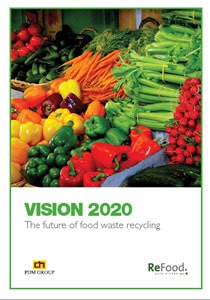 According to PDM, the 10-point manifesto, which was launched yesterday (February 28) in central London, is intended to provoke debate among industry stakeholders, such as retailers, government, businesses and householders.
PDM hopes that the document will bring together these parties to address issues such as treatment and collection infrastructure and renewable energy generation.
Renewable energy has becoming increasingly important to PDM, as it is operates biomass-to-energy facilities and is currently developing its first ever anaerobic digestion facility (see letsrecycle.com story).
Philip Simpson, commercial director at PDM, said: The manifesto outlines a number of areas which need to be addressed if Britain is to remove food waste from landfill by the year 2020.
We hope it will prompt debate in the sector and drive thought about how the industry can come together and deal with the UKs burgeoning food waste problem.
Incentives
The main areas focussed on in the document are:
- Landfill bans on food waste from landfill as a driver to encourage businesses;
- Tax breaks for those recycling waste in the lead-up to bans;
- Support on dealing with household waste;
- Consideration of planning laws for recycling facilities;
- And, a means of addressing risk of creating other waste streams.
Mr Simpson said: While a total landfill ban will be needed if we are to truly capture the vast majority of food waste produced in the UK, other drivers will have to be put in-place to encourage participation and adoption among customers and businesses alike.
Mr Simpson also said that businesses would need an incentive to address food waste. He said this would be best achieved through tax rebates for participating companies, while more thought was needed on the topic of household food waste collections.
He said: Incentives are just a small part of any approach and we need to address a number of factors around the argument from planning permission to securing waste stream tonnages if we are going to truly make food waste recycling a mainstay of daily life.
As part of the food waste manifesto, PDM is also encouraging businesses throughout the food supply chain to sign up to its food waste commitment.
We are not suggesting that the manifesto holds all the answers, said Mr Simpson. But we are hoping that the points raised will be a catalyst to help take the sector to the next level and eventually eliminate food waste from landfill by the year 2020.


Register for free to comment