


The waste disposal authority is encouraging parents in north London, with a baby under 18 months, to claim the £54.15 subsidy to help with the cost of buying their first set of reusable nappies.
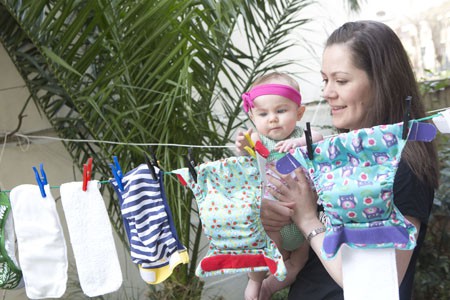
The NLWA is offering residents the 54.15 subsidy, equivalent to the average cost of disposing of one child’s nappies, in a bid to offer alternatives to the disposable nappy which make up 4% of household waste sent to landfill.
According to the waste authority, infants are estimated to go through up to 6,000 nappies before becoming potty trained, creating a tonne of household waste that may end up in landfill. It claims that switching to reusable nappies instead of using disposable may reduce household waste by up to half.
Reusable
Amanda Irwin, an Islington mum with a six month old daughter has previously claimed a real nappies voucher and said: “I would highly recommend other mums give reusable nappies a go. Even part time use is a help with your household costs and waste, and they’re better for the environment.”
She added: “They create much less waste – we only throw out the equivalent of one tiny nappy sack of waste every couple of weeks.”
NLWA is the second largest waste disposal authority in the country serving nearly 1.9 million and arranging the disposal of 845,000 tonnes of waste each year, primarily through the Edmonton incinerator.
The authority has supported the use of real nappies in north London since 2005 before coming part of The Real Nappies for London scheme established in 2007.
Scheme
Boroughs participating in the subsidy scheme include; Camden, Hackney, Haringey, Islington and Waltham Forest with other boroughs such as Barnet and Enfield operating a cash-back scheme.
The reusable nappies are made of fabric and come with biodegradable (flushable) paper liners or washable (cotton, silk and fleece) liners.
The Wise Up To Waste campaign was launched in 2012 by NLWA as a way to engage the public in reducing waste and increasing recycling across North London. North London currently have a recycling rate of 33% with the aim of increasing that to 50% by 2020.

Register for free to comment