

It is anticipated that this could add significant cost to the treatment of waste electrical and electronic equipment, as hazardous waste materials are subject to greater regulatory controls than non-hazardous waste and due to more limited treatment options.
The Agency outlined its POPs position this month, following research financed through the 2018 WEEE Compliance Fund carried out by the Industry Council for Electronic Equipment Recycling (ICER) (see letsrecycle.com story).
The ICER project tested samples of plastics from different WEEE streams and found that POPs were present at levels higher than the permitted limit across multiple WEEE streams.
POPs thresholds have been under scrutiny in light of the recast of the POPs regulation in Europe, which sets tougher controls on flame retardants such as decaBDE. DecaBDE – decabromodiphenyl ether – has commonly been used in consumer electrical products, and plastic vehicle components.
The recast regulation sets maximum concentration levels for POPs in waste materials to levels that are below what has been commonly used in products in the past.
Hazardous
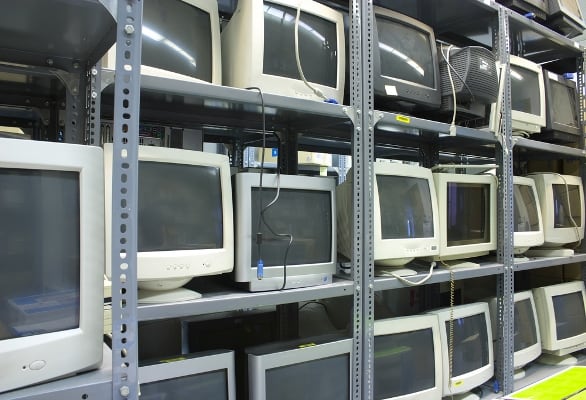
This means that many items, in particular Small Mixed WEEE, Cathode Ray Tube TVs and screens and Flat Screen TVs, are likely contain levels of POPs that effectively render them hazardous.
The Agency’s position on POPs has been informed by the ICER research project and was outlined at a recent meeting of the Council, at which industry representatives were presented with clarification on the European Waste Catalogue (EWC) codes and disposal routes that must now be applied.
“All members of the AATF Forum have committed to implementing the changes required for the treatment of recovered plastics from the affected SMW and Display streams with immediate effect and to work with the Agencies to ensure that disruption at local authority sites is minimised.”
According to the AATF Forum, which represents the UK’s WEEE recycling industry items that can no longer be recycled without separate treatment may instead need to be sent to high-temperature incineration plants to be adequately disposed of. Much of this material is likely to be exported for treatment, due to a lack of available facilities in the UK, the AATF Forum says.
In a statement following the ICER meeting, the AATF Forum, said: “All operators managing WEEE will now have to understand the implications on the handling of WEEE, their environmental permits and their methods of disposal of their output. There will also need to be a clear understanding of the impact on recycling rates with the potential that some target rates may now not be achievable.
“There is also concern over the impact this may have on reuse as POPs regulations prevent items containing POPs being put back into the market. Further guidance is awaited on this from the EA.
“All members of the AATF Forum have committed to implementing the changes required for the treatment of recovered plastics from the affected SMW and Display streams with immediate effect and to work with the Agencies to ensure that disruption at local authority sites is minimised.”
WEEE Conference
25 September, Lord’s Cricket Ground
Hear from expert speakers discussing the present and future of the UK’s WEEE sector.

Subscribe for free