


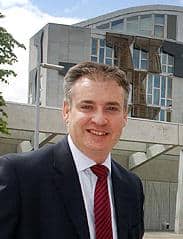
We are making progress but we must go further in relation to all types of waste
Richard Lochhead
The draft Plan, which was unveiled in Inverness by environment secretary Richard Lochhead, outlines the Scottish Government's current thinking on how to achieve its ambitious Zero Waste objectives of increasing recycling to 70% by 2025 and seeks stakeholder views.
This ranges from whether the Government is right in proposing to exclude anaerobic digestion and mechanical biological treatment from its 25% cap on energy-from-waste to whether it should set a target to reduce municipal waste arisings by 1% per year.
And, the Scottish Government also asks for opinions on whether Scotland should have fiscal autonomy to set its own landfill tax in the country. This follows a suggestion in June 2009 by the Calman Commission – an independent body established to assess the impact of devolution since 1998 – that the Government should be able to set its own rate for material going to landfill.
Launching the 12-week consultation, the environment secretary said: “Scotland must reduce its impact on the local and global environment. Our draft Zero Waste Plan maps out how we can reduce the country's waste, meet our highly ambitious waste targets and contribute to the work on climate change.
“This is a positive step in tackling Scotland's waste – viewing it as a resource rather than a problem. There are major economic benefits, as well as environmental gains, to be had including creating thousands of jobs and new business opportunities,” he added.”
Commercial waste
Key proposals within the plan also include:
-
The possible implementation of further landfill bans on materials including glass, metals, textiles and wood.
-
Increasing the focus on re-use, including potential targets.
-
Encouraging businesses to reduce waste, increase their recycling of commercial waste and to realise the economic benefits of doing so.
Stressing the importance of the tackling all kinds of waste, Mr Lochhead said: “We all have a part to play in meeting this vision, including the construction industry which contributes around 45% of Scotland's waste. Reducing waste is good for business, as well as for the environment, as it reduces costs. We need to do more to tackle all types of commercial waste.
“The Scottish Government has already signed a commitment to halve its construction waste to landfill by 2012. I am happy to announce that the Scottish Federation of Housing Associations is also today pledging to do the same. I would urge others involved in construction projects to do the same.
“We are making progress but we must go further in relation to all types of waste. SEPA's latest provisional figures show that we are already recycling and composting 34.3% of our municipal waste, but we need to reach 40% by the end of 2010. The bar is set and we must work together to reach our goal of a Zero Waste Scotland,” he added.
As well as outlining the Scottish Government's priorities and polices in relation to waste, the Plan, when finalised, will comply with the requirement in Article 28 of the revised Waste Framework Directive for Member States to have a waste management plan and the requirement in Article 29 for Member States to have a waste prevention programme.
Kenny Boag, national waste policy unit manager at the Scottish Environmental Protection Agency (SEPA), said: “We have been pleased to have had the opportunity to work closely with the Scottish Government in relation to this draft Plan. There are a number of key tasks for SEPA which will help deliver the final Plan.
“These include helping to develop a supportive and proportionate system of waste regulation; working closely with our partners in the waste industry and Government to make further improvements to data on commercial and industrial waste; and helping to ensure that the planning system works effectively when it deals with waste management,” he added.
The consultation is set to close on November 13 and will then be used to inform the Government's final publication of the Zero Waste Plan, which is set to be published at the start of 2010.

Register for free to comment