


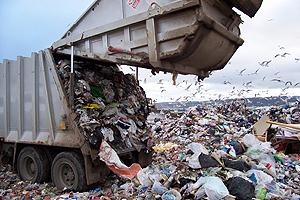
At present, landfill tax is set to rise by £8 a year until 2013, but this has been widely criticised for being “medium term” and not providing enough long-term certainty for those investing in new waste facilities (see letsrecycle.com story). If this ‘escalator' was extended until 2020, landfill tax would rise from the current £40 a tonne to well over £100 a tonne – providing a huge incentive for recycling.
Ministers were also advised by the EIC to “immediately reverse” funding cuts in programmes targeted at improving resource efficiency in business – which are being streamlined under the auspices of WRAP from April 1 (see letsrecycle.com story) – by recycling revenues from the landfill tax.
And, they were urged to develop a financing model for new waste and other green infrastructure known as ‘Environmental Tax Increment Financing'. This would work on the principle that the supply of new or improved infrastructure usually leads to new development and an increase in the value of nearby property, both of which serve to increase the level of taxation in the area which can be captured and used to fund the infrastructure provided.
Investment
Overall, the EIC campaign calls for a far greater level of investment in driving the transition to a low carbon economy and, alongside waste, also covers areas including energy efficiency, transport pollution control and better water regulation.
The EIC believes that, at present, the government risks forfeiting a large share of the global environmental marketplace unless it does not invest now. It also calls for an Environmental Industrial Strategy to be developed to build on the government's Low Carbon Industrial Strategy, because it claims that the emphasis on ‘low carbon' could obscure other environmental and sustainability issues.
EIC's policy director, Danny Stevens, said: “For years the government has failed to make proper use of fiscal measures to encourage the purchase of environmental good and services. It has missed countless opportunities to put an effective price on pollution through the tax regime and, therefore, done little to encourage investment in environmentally sustainable behaviour.
“Political pressure to tackle the deficit must not distract attention away from the urgent need to put environmental protection at the heart of the 2010 Budget.”


Register for free to comment