


The warning came from Alan Ffred Jones, a former leader of Gwynedd council, who is now chair of the environment and sustainability committee of the National Assembly of Wales.
Mr Jones was speaking just 24 hours before an important debate in the Welsh Senedd today (March 11) at which the minister for natural resources, Carl Sargeant, is expected to explain the Welsh Government’s response to an inquiry held by the committee last year. This is likely to shape the future of recycling policy in Wales over future years.
Ministerial announcement
Based on the government’s written response, Mr Sargeant is to announce that there will be an independent review of the government’s existing collection blueprint for waste services.
And the minister will also confirm:
- an acceptance that there should be more collaboration and common services between councils;
- more information is needed about the destination of waste and recycling;
- weight-based targets should be investigated for any unintended impacts;
- how councils will meet future waste targets and future waste arisings forecasts;
- and the case for a national brokers for the sale of recyclates from local authorities across Wales.
Conference
The assembly committee chair, Alan Ffred Jones was speaking at a CIWM conference in Cardiff yesterday (March 10) which had heard the Institution’s president John Quinn note how Wales had kept spending on recycling even in times of austerity.
The Welsh committee chair explained that recycling had received “consistent policy and consistent funding from the Welsh government”.
He continued: “As a nation Wales is achieving one of the highest recycling rates in the EU and it is the only country in the UK to have set a statutory target of 70% by 24/25. But, from here to there will be far more difficult than reaching the present position.”
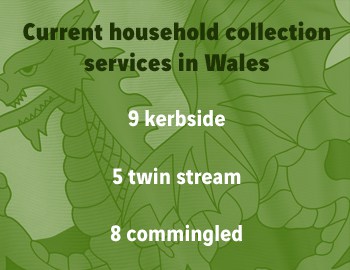
And, Mr Jones criticised the fact that there were different collection regimes across the 22 council areas in Wales. “There are 22 different collection ways and we have suggested in the past that there should be a common approach. Now government thinks there should be a common approach too.” In questions on this point at the conference, he said: “We are only 3 million people so 22 different collection systems is madness. There should be some sort of agreement between local authorities.”
People
Mr Jones noted that the government’s preferred method of collection is kerbside sort. But, he pointed out that the committee had found that kerbside sort is not always the cheapest option. “Research does suggest that it is more to do with people that the efficient operation of those systems,” he added.
Acknowledging that there is to be an independent review of recycling and waste policy in Wales, Mr Jones said that “government has suggested this and will update the recycling blueprint in 2015. The truth is that we have 22 councils or hundreds of officials trying to find out the best tools for the job.”
This review will include looking at collection systems, including frequency. The committee chair remarked: “Gwynedd has three weekly collections which seem to work as recycling rates have risen but there is some flexibility on the ground, so it does seem to work. Gwynedd recognises that for some families it needs flexibility.”
The review is also likely to like at whether more materials can be recycled and reprocessed in Wales which could make people “accept recycling more readily”.

Environment Bill
Dr Andy Rees, head of waste strategy at the Welsh Government, told the conference that within an Environment Bill this spring there will be enabling powers and a “suite of interventions to keep recyclables separate at source”. He explained that this is a new piece of legislation and will cover business and the public sector with a potential ban on some materials to landfill such as wood and food waste. (For the Environmental Bill consultation document, click here.)
Dr Rees also outlined the government’s current preferred collection approach for domestic waste as in the blueprint.
- weekly kerbside sort with 3 boxes
- Weekly food waste with free liners
- Use of single pass sort recovery
- Fortnightly garden waste
- Fortnightly residual waste or longer period
He argued that “kerbside sort works and is popular with residents” and that on the business front, he also hoped for a “consistent high quality source separated approach to recyclable collection”.
Funding
Also speaking at the conference, Craig Mitchell, the Welsh Local Government Association’s head of waste support, said that in terms of funding, local authorities had seen “a growth in spending only in social services but the environment has seen one of the smallest reductions, smaller than education on one analysis, which is quite telling.” He added that this meant “waste has been kept higher up the agenda than might have been expected.”

Register for free to comment