

Speaking during the press conference at the unveiling of the package in Brussels, Mr Timmermans said that the package would seek to maximise recycling, while also seeking to offer a disincentive to Member States focussing on energy from waste as an alternative to landfill.
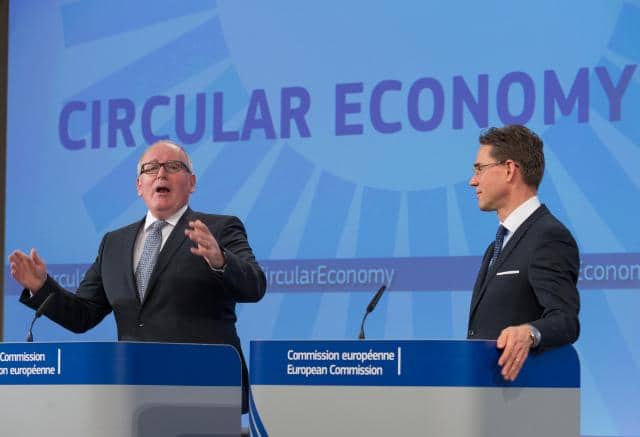
Among the headline figures within the package are a 65% by 2030 municipal waste recycling target, as well as a restriction on waste to landfill of 10%. Measures are also put forward to mandate the separate collection of biowaste where it is technically, environmentally and economically practicable.
The Commission has also pledged to address resource use by widening the scope of the Eco-Design Directive to tackle product obsolescence, reparability and resource use in what it claims is a ‘full-circle’ strategy for improving consumption within the EU.
On the waste measures contained within the package, Mr Timmermans stated: “Unlike the previous Commission, we are setting a strict target for no more than 10% of waste to end up in landfill by 2030. Putting things in the ground is losing them to recycling.”
Landfill
He added that Member States would be encouraged to adopt measures including landfill taxes or incineration levies, although there is not likely to be one single measure that the EU will dictate that Member States must adopt.
“As long as landfill is cheap it will not be an option that will be given up on. We need to respond to this in a step by step, long-term basis,” he said. And, he emphasised that the Commission would not seek to allow Member States to rely on energy from waste as an alternative to landfill.
Mr Timmermans also noted that the 10% landfill aim would represent a ‘huge effort’ for some Member States.
Responding to criticism of the ambition within the target, he said: “If you only want to look at the difference between 65% and 70% [recycling targets] it is very unfair if you don’t take into account that we are legally setting out a clear roadmap to get there.”
Ban
The Commission also faced questions from journalists over the lack of a statutory ban on sending waste to landfill, which had been included within the proposals put forward by the Commission in its package adopted in 2014.
“Unlike the previous Commission, we are setting a strict target for no more than 10% of waste to end up in landfill by 2030. Putting things in the ground is losing them to recycling.”
Frans Timmermans
EU Commission
He said: “We consulted with people who have worked with this for many years. One of the previous issues was that we could not control what they put into the ground. How do we do this? Do we carry out inspections?
“We should act where waste can be separated. We can make sure that separation of waste is done properly and inspected properly, so we can make sure what can be recycled is recycled.”
On energy from waste he added: “We have to make sure that incineration doesn’t become the easier way out to combat landfill. If you link it to the target and start with separation we can contruct the whole system from that.
“What I want to avoid is creating the economic and legal incentives for incineration.”

Register for free to comment