

Local authorities are less likely to receive a rebate for material sent to MRFs under contracts signed in 2013/14 compared to the previous year according to findings in the Waste & Resources Action Programmes annual gate fees report.
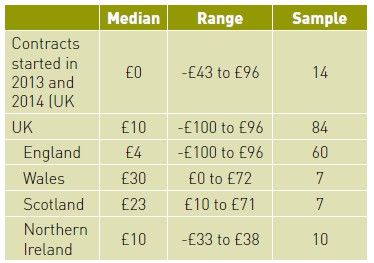
The report which was published today (July 9) suggested that gate fees rose for the sample of 14 MRF contracts signed in 2013 and 2014, with a median gate fee of 0 per tonne compared to an average 10 per tonne rebate for local authorities for new contacts struck in 2011 and 2012.
The report notes that the average cost for local authorities to send mixed recyclable materials to MRFs saw a slight increase during 2013/14, with the overall median MRF gate fee paid by councils to facility operators rising to 10 per tonne, up by just 1 from the average gate fee of around 9 during 2012/13.
Gate fees are paid either by a local authority to a MRF operator for processing dry recyclables, or a fee paid to a local authority by a MRF operator for the material.
According to WRAP there is a large variance in the level of fees paid by authorities with some paying as much as 96 per tonne for their material to be sorted, while others received rebates of up to 100 per tonne from MRF operators.
Quality
WRAP claims that the range in gate fees paid by local authorities may be due to a variety of factors including the quality of input materials, the level of sophistication and cost associated with the MRF technologies being used, varying prices for the sale of different materials, and different ways of apportioning material sales revenues between the MRF operator and the local authority.
Around 35% of local authorities surveyed are not paying a gate fee for MRF material according to the organisation.
WRAP director Marcus Gover, said: Many factors influence individual gate fees and so costs vary substantially, both regionally and for the same types of treatment. In the case of MRFs, the range of gate fees is much broader than for other technologies and while some local authorities report receiving as much as 100 per tonne in income for their unsorted recyclate, others report paying up to 96 per tonne for their material to be sorted. This variation is related to a number of different factors which we outline in todays report, which attempts to bring greater clarity to this very complex situation.
The report, which covers a range of treatment technologies, suggests that the median gate fee paid for treating food waste at AD facilities remains steady at 40 per tonne, but varies due to a number of factors with a range from 19 to 63.
AD
WRAP also claims that based upon survey responses that the uptake of AD technology by local authorities has increased over the last twelve months, with almost twice the number of local authorities reported using AD facilities in the current survey than in the previous survey.
Other changes noted include a greater number of local authorities reporting gate fee data for mechanical biological treatment (MBT) plants. Currently, the median MBT gate fee at is 84 per tonne, up from 76 per tonne in the previous survey.
The median Open Air Windrow composting gate fee remains unchanged at 24 per tonne, as does the median charge for In-Vessel Composting (IVC) of mixed food and green waste at 46 per tonne. The median IVC gate fee for green waste only is 27 per tonne.
Related Links
WRAP also adds that the sample of gate fees paid by local authorities at EfW facilities continues to depend on the age of the facility with the median cost at facilities built before 2000 remaining unchanged at 58 per tonne, and higher prices charged at plants built after 2000; averaging 96 per tonne, up 6 on the previous year.
The 2014 edition of the report is the seventh annual version of the document.


Register for free to comment