


The guidance has been drawn up to achieve ‘greater harmonisation’ of the implementation of the EN 643 standard, the grading criteria which outlines the acceptable level of quality to which paper recyclers should aim.
Last revised in 2013, the EN 643 standard suggests a tolerance of 1.5% contamination should be sought by reprocessors.
According to Brussels-based CEPI, the revised guidelines issued yesterday (4 April) put a strong focus on the inspection procedure for quality controls at mills when deciding whether a load should be accepted or rejected.
CEPI’s guidelines include recommendations for baling conditions, control of moisture content and content of unwanted material within loads.
CEPI
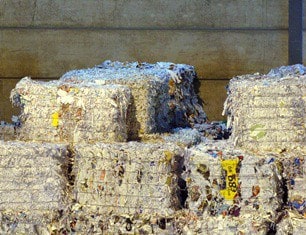
The recommendations suggest that material should be baled in such a way that they can be handled, stored and transported in a safe and cost-efficient manner in the mill, with right-angled and well-pressed bales particularly favoured.
On the control of moisture levels in bales CEPI claims that every load should be examined visually by buyers, and if any evidence of moisture is detected, moisture measurement should be carried out.
The guidance states: “The result of the visual inspection might lead to the acceptance of the load without further inspection, a conditional acceptance or refusal depending on a gravimetric inspection or technical measurement. Visual inspection alone can only lead to the acceptance or non-acceptance of the material.”
And, the guidance also makes the point that “maximum tolerance” on moisture is to be “defined between buyer and seller”.
The guidance notes that measurement can be done via several methods, which include opening chosen bales taking samples using core drilling devices, or technical measurement using technical devices such as near infrared scanners. For loose material, the guidelines recommend assessing the material using a gravimetric method or other technical measurement.
CEPI adds that loads with under 10% of moisture content should be accepted, while those with more than 10% and over maximum tolerance as set out between the buyer and seller of the material should be rejected. Those with over 10% moisture content but below maximum tolerance levels should be offered at a discounted level. [Note, added 8 April, there is a footnote to this last paragraph in the document, which we have repeated above and here: the guidance also makes the point that “maximum tolerance” on moisture is to be “defined between buyer and seller”.]
On contaminants, CEPI recommends that visual inspection of loads should be carried out as an ‘obligatory minimum’ by paper mills and that if significant evidence of non-target materials is found, this should then result in measurement of contamination in the load. Any decision on rejection of a load should then be communicated directly to suppliers.

Register for free to comment