


Waste experts have given cautious support for the proposed introduction of a loss on ignition (LOI) testing regime to determine if trommel fines material can qualify for the lower rate of landfill tax.
The LOI testing was announced by HM Treasury last week (March 19) as part of the landfill tax measures in the Budget. The testing would see a sample of fines material sent to a laboratory. The sample is then dried to drive off moisture, and weighed and heated in an ashing chamber furnace which unlike an oven is refractory-lined and can heat materials at higher temperatures.
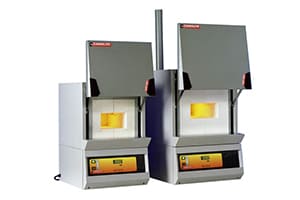
Through heating the sample and letting it cool down before weighing again, scientists are able to calculate how much mass is lost through the escape of volatiles compounds found in degradable organic material.
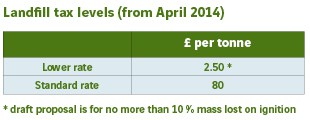
The difference in weight before and after the fines material is measured indicates the presence of non-inert material, and whether it should be charged at the lower or higher rate of landfill tax. The lower rate currently stands at 2.50 per tonne and the higher rate is set to rise by 8 to 80 per tonne from April 2014 (see letsrecycle.com story).
The announcement of the testing regime follows a series of discussions held between tax officials from Her Majestys Revenue & Customs (HMRC) with members of the waste management industry – represented by the Environmental Services Association (ESA), and the United Resource Operators Consortium (UROC), on behalf of skip-hire firms (see letsrecycle.com story).
Under the new testing regime, which would come into effect by April 2015, only fines that lose no more than 10% mass on ignition would be considered eligible for the lower rate of landfill tax. Full proposals are to be set out in a consultation document, which is expected later this year.
Industry views
The official government announcement on fines last week stated: The government announced in today’s Budget that it will introduce a loss on ignition testing regime covering the residual waste from waste processing at waste transfer stations (fines) by April 2015.
Only fines below a 10% threshold would be considered eligible for the lower rate. Full proposals will be set out in a consultation document later in 2014. This document will be developed with the government-industry working group over the next couple of months.
Commenting on the announcement, Sam Corp, head of regulation at ESA, today embraced the proposals to regulate landfill tax through standardised LOI testing, which he said the association had been backing for some time.
UROC also welcomed the proposals but urged its members to provide data in order to determine what LOI percentage operators are currently achieving on their trommel fines.
A spokeswoman for UROC said: UROC invites operators to provide test results for any LOI testing carried out over the last 12 month period. For those who may not already test trommel fines UROC asks that operators send representative trommel fine samples for laboratory LOI testing and for results to be forwarded to us. The objective of this Call for Evidence will assist UROC in its plight to help finally resolve the trommel fines issue.
Checks
Despite broad acceptance of the proposals, some experts fear infrequency of checks and a lack of consistency between samples, as well as uncertainty over who will be administering the tests could leave the proposed system open to abuse.
Leslie Heasman, managing director of environmental consultancy MJCA, said: If its a consistent sample it will provide confidence that what they [The Treasury] are planning to do is acceptable. The difficulty comes if firms are coming to the gate with materials from different sources. I would expect there to be something about consistency outlined in the HMRC consultation.
Contract
One waste regulatory specialist added that some landfill operators in the UK already offer commercial, on-site LOI tests with skip hire firms delivering occasional samples of fines material at the beginning or end of a designated contract.
He said: What worries me is we do not know who is going to administer the LOI tests, so it may be open to abuse. Fines look like fines, you cant tell whats in there unless you start taking it apart. Unfortunately, there will always be a minority of operators who will be tempted to cut corners.
Asked whether the length of time taken to test fines would be impractical for skip hire firms, one insider said the regime would not affect business or increase stockpiling as it only takes a week or two to get results.


Register for free to comment