

This approach seeks to establish a benchmark cost for managing packaging waste for local authorities, based on the adoption of ‘good practice’ in the design and ‘effective delivery’ of their collection system. The costs are also based on the achievement of results comparable to ‘relevant peer authorities’.
A local authority’s modelled costs could be higher or lower than the actual costs they incur.
LARAC believes the use of reference costs “goes against” the concept of full net cost recovery.
Carole Taylor, LARAC chair, said: “The scope of costs that producers have to pay under EPR remains broad and that is how it should be, and is welcomed.
“However, there are aspects of the proposals in the consultation that put doubt in the mind of local authorities that they will get their full net costs.
“We must not end up in a situation where there so many strings attached to the funds that producers are not contributing as they should be to the local authority services that are dealing their packaging and helping them to achieve targets they have to meet.”
LARAC represents local authority recycling officers and those working in similar or related posts.
Response
The government’s consultation on EPR closed on 4 June (see letsrecycle.com story). LARAC made its response public today (8 June).

In its consultation response, LARAC said material sales should lie with producers rather than local authorities. It believes producers are “better placed” to deal with the fluctuations in market values.
LARAC expressed concerns that proposals on business waste payments “do not appear to be fit for purpose”. It said it would have expected to see “more concrete proposals”. Several recycling organisations including the Recycling Association have expressed misgivings in recent weeks over the proposals (see letsrecycle.com story).
LARAC also has doubts about how proposals on payments for packaging in litter might be implemented.
Plastic film
LARAC expressed concerns about the timeline for the collection of plastic film from households. The local authority organisation does not believe that local authorities should collect plastic film from 2026/27.
It said the necessary sorting infrastructure does not currently exist in the UK and end markets are still at the early stages of “being proven”.
Until these considerable barriers can be overcome, LARAC said, there is little likelihood of widespread collection of film from households.
Labelling
LARAC supports the mandated use of labelling indicating whether packaging is recyclable. The local authority organisation believes the not-for-profit On-Pack Recycling Label (OPRL) scheme should be taken forward as the mandatory label for recycling in the UK, given its “wealth of experience” and the fact it is “well recognised already by consumers”.
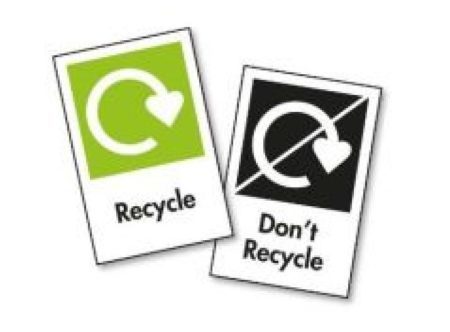
LARAC said OPRL would need to be supported by well-funded national campaigns, as well as local campaigns to get people to use the services that local authorities provide.
LARAC would also want to see other recycling labels removed from packaging as much as possible, as it believes these are “often misleading and meaningless from a consumer recycling advice point of view”.

Register for free to comment